




Buying moringa leaf powder in bulk is a grade decision before it is a price decision. Two suppliers can quote the same product name and deliver materials that behave differently in your blender, your filler and your finished pack - because the difference sits in the form, the milling, the carrier and the documentation rather than on the label. This guide is written for the buyers who have to settle that: procurement teams, product developers and quality managers at supplement, food and beverage brands, contract manufacturers and private-label suppliers. It covers what the two main grades actually are, how to choose between them, the specification items to fix in writing, how bulk orders are packed and documented, and where the material fits across applications. Buyers new to botanical ingredients may want the wider format context in our herbal extract powder sourcing guide.
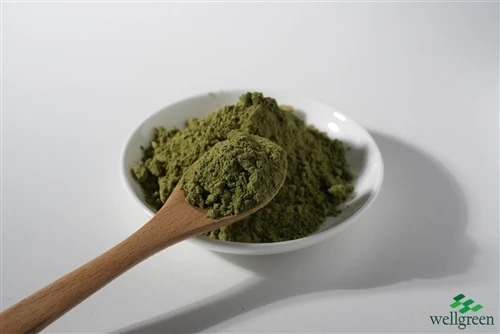
What Moringa Leaf Powder Is - and Why Buyers Source It in Bulk
Moringa leaf powder is the dried leaf of Moringa oleifera, milled to a powder. It is a whole-leaf material rather than a standardised extract, which is the single most useful fact for a buyer: what you receive is defined by the leaf, the drying method and the milling, not by a marker compound content.
Four characteristics drive bulk purchasing decisions in this category:
- Volume per unit of active. Whole-leaf materials are used at comparatively high inclusion rates, so purchase volumes are larger than for standardised extracts and the cost of a specification error scales with them.
- Colour and flavour carry-through. Leaf powder contributes both to a formulation, so sensory behaviour has to be specified rather than treated as a constant.
- Microbiological and heavy-metal risk. Leaf materials grown and dried in the open carry a contamination profile that has to be tested per batch rather than assumed from a grade name.
- Consistency across harvests. Because the material is not standardised to a marker, batch-to-batch variation is the practical risk, and the specification is how you control it.
That combination is why buyers specify this material in writing rather than buying from a catalogue listing, and why the checks below matter more here than they do for a well-characterised synthetic ingredient.
Leaf Powder vs Extract Powder: Choosing the Right Grade
The first decision is which grade you are buying, and the two are not interchangeable. Moringa leaf extract powder is produced by extracting the leaf and standardising the result, usually to a defined marker content; the whole-leaf powder keeps the full matrix. The table sets out what each route implies for a purchase specification.
| Grade | Process route | Specification items to fix | Where it fits |
|---|---|---|---|
| Leaf powder (whole leaf) | Harvest, dry, mill and sieve the whole leaf | Particle size distribution, moisture, microbial limits, heavy metals, pesticide residues, colour and flavour description | Formats where the whole-leaf matrix and colour are wanted at higher inclusion rates |
| Moringa leaf extract powder | Extract the leaf, then standardise to a defined marker content | Marker content with its analytical method, carrier and its proportion, extraction solvent residuals, moisture, microbiological limits | Formats that need a tighter, repeatable contribution from a smaller dose |
| Organic grade of either form | Same routes, run inside a certified organic scope | Everything above, plus the operator certificate scope and the lot-level transaction document | Markets and brands where an organic claim is part of the proposition |
Two rules follow. Decide the grade against your inclusion rate first - a formulation built around the extract does not simply scale up with the whole-leaf powder, because the matrix, colour and taste load change together. Then compare cost per unit of the material actually delivered, with the carrier and moisture content accounted for, rather than cost per kilogram of product name. If the wider format question - milling targets, carriers and powder versus liquid - is still open, our herbal extract powder sourcing guide covers it in more depth.
Specification Checklist: What to Ask a Moringa Supplier For
The items below are what makes two quotations comparable. Values belong to your own development and quality teams and should be confirmed on the batch certificate of analysis rather than taken from a catalogue page.
- Particle size distribution, with the method. Governs blending uniformity, dusting and mouthfeel in the finished product.
- Moisture and water activity. The parameters behind caking, clumping and shelf-life drift.
- Microbiological limits. Total aerobic count, yeast and mould, and the specified organisms your market requires.
- Heavy metals and pesticide residues. Set against your destination market, tested per batch rather than declared once.
- Marker or compositional profile. For an extract, the marker content and its analytical method; for whole-leaf material, the compositional basis you are buying against.
- Carrier and its proportion, where the grade includes one, plus residual solvents if the route of manufacture uses them.
When you shortlist a moringa extract supplier, ask the same three questions you would ask of any botanical house: what the certificate scope covers, which parameters are tested on every batch, and what the last three batches actually measured. Our note on verifying a plant extract supplier sets out the general process; the moringa-specific addition is that the whole-leaf grade carries more of its risk in the harvest and drying steps, so the documentation needs to carry provenance as well as analysis.
Where an organic grade is offered, the claim is a certification statement rather than a product property: ask for the operator certificate with its scope and validity dates, plus the lot-level transaction document. Organic certification applies to the products and processing steps inside the certified scope, so confirm the coverage for the specific grade rather than accepting a supplier-level statement. In the European Union, for example, organic production and labelling are governed by Regulation (EU) 2018/848, and organic status is verified through the operator's certification rather than through the product name.
Bulk Sourcing Mechanics: Packaging, Shelf Life and Documentation
Once the grade and specification are fixed, the purchase runs on packaging and paperwork. For moringa powder bulk orders, three things decide whether the material arrives in the condition it left in:
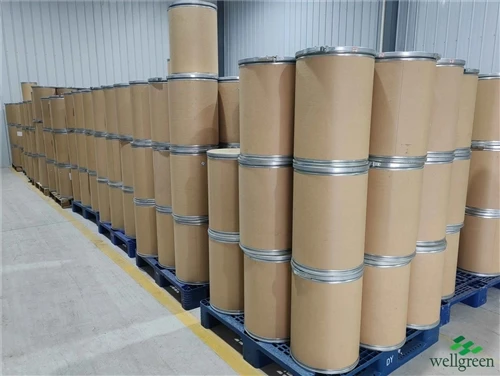
- Packaging format. Fibre drums or bags with an inner moisture barrier are the usual configuration; confirm the net weight, the liner type and whether the packaging is food-grade. Ask how the packaging protects against moisture pickup in transit, because that is where a good batch is most often degraded.
- Shelf life and its assumptions. Ask for the storage conditions the declared shelf life assumes - temperature, humidity and light protection - and for the stability data behind it, split between sealed storage and in-use exposure after opening.
- The document pack. Specification sheet, batch certificate of analysis with methods stated, safety data sheet, allergen, GMO and BSE/TSE statements where your market requires them, country of origin and producing site, and the certificates that apply to the products holding them.
Two practical habits reduce disputes. Verify that the lot number on the certificate matches the lot number on the packaging before the container is cleared, and keep a retained sample from each delivered lot so a later question can be answered against the material itself rather than against the paperwork alone.
Applications: Beverage, Nutrition and Personal Care Formats
The same grade can be specified differently depending on where it lands, and the application decides which specification items move to the front:
- Beverage and instant drink formats. Dissolution, sediment and colour stability matter most, together with flavour contribution at the inclusion rate you are using.
- Nutrition and supplement formats. Flowability, particle size and moisture control dominate, because the material has to dose accurately and hold its specification through the shelf life.
- Personal care formats. Colour, odour and microbial limits come to the front, and the grade may need to be specified against a different market framework than a food grade.
Where a formulation needs a visually defined colour contribution rather than a botanical identity, our background note on fruit and vegetable powders as colorants covers how that specification is approached. One caution for all three routes: whether a leaf powder is treated as a food, a supplement ingredient or a cosmetic ingredient is a market-specific determination, so confirm the position with the competent authority or a regulatory consultant for your destination - this article is a sourcing orientation, not legal advice, and the applicable rules should be checked against the latest official notices.
FAQ
What is the difference between moringa leaf powder and moringa extract powder?
The whole-leaf powder is the dried and milled leaf, so it keeps the full matrix and is defined by the leaf, the drying and the milling. The extract powder is produced by extracting the leaf and standardising the result, usually to a defined marker content, and is defined by that marker and its analytical method. They are not interchangeable in a formulation, because the colour, taste and inclusion rate behaviour differ.
What specifications should I request for bulk moringa leaf powder?
Particle size distribution with its method, moisture and water activity, microbiological limits, heavy metals and pesticide residues set against your destination market, the compositional basis you are buying against, plus the carrier and its proportion where the grade includes one. Confirm each value on the batch certificate of analysis rather than accepting a catalogue figure.
Is organic moringa leaf powder available, and what does the certificate cover?
Organic grades can be offered, and the claim rests on certification rather than on the product name. Ask for the operator certificate with its scope and validity dates and for the lot-level transaction document, then confirm that the specific grade and its processing steps fall inside that scope. Certification applies to what is inside the declared scope, so coverage should be confirmed per product.
How is bulk moringa powder packed, and how long does it keep?
Fibre drums or bags with an inner moisture barrier are the usual configuration. Ask for the net weight, liner type and the storage conditions the declared shelf life assumes, plus stability data covering both sealed storage and in-use exposure after opening. Check that the lot number on the certificate matches the packaging lot, and retain a sample from each delivered lot.
Which applications suit moringa leaf powder best?
Beverage formats where dissolution, sediment and colour stability are specified; nutrition and supplement formats where flow, particle size and moisture control decide dosing accuracy; and personal care formats where colour, odour and microbial limits lead. The grade should be chosen against the inclusion rate of your formulation, and the regulatory classification confirmed for the destination market.
Whichever grade you shortlist, the specification and the batch documents decide what actually arrives - so fix the form, the particle size and the contaminant limits in writing, and confirm them per lot rather than per brand name. If the project needs modified formats or private-label work, OEM and custom manufacturing covers how that scope is handled.
Request Specifications & Samples
Tell us the grade, the application and your destination market, and we will send the specification sheet, batch documentation and a sample plan for your own evaluation.
Email: liu@wellgreenxa.com
Tel/WhatsApp: +86-19890982054
Or use the inquiry form below - we usually reply within 24 hours.
Sources
- European Union - Regulation (EU) 2018/848 on organic production and labelling of organic products. https://eur-lex.europa.eu/eli/reg/2018/848/oj/eng
- U.S. Food and Drug Administration - Dietary supplement ingredient resources. https://www.fda.gov/food/dietary-supplements/information-select-dietary-supplement-ingredients-and-other-substances
