



Sourcing herbal extract powder is a specification exercise, not a catalogue lookup. Two suppliers can both quote "chamomile extract, powder" and deliver materials with different extract ratios, different carriers, different particle size distributions and different moisture behaviour - and those differences show up later as weight variation, caking or a label claim that no longer matches the batch. This guide is written for the buyers who have to pin those variables down: procurement teams, product developers and quality engineers at supplement, food and beverage manufacturers. It covers what the material actually is, which powder-format properties decide value, the specification layer behind the certificate of analysis, the import documentation to prepare, and how to shortlist suppliers. If you are mapping the range first, start with our nutritional supplement ingredient range.
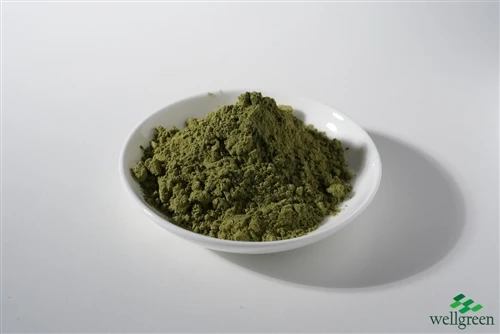
What "Herbal Extract Powder" Actually Means
The common confusion in this category is the difference between a ground botanical and a true extract, which is why the comparison of herbal extract vs powder comes up so often. A ground herb powder is the dried plant, milled - the full fibre, colour and variability of the raw material. An extract powder is the output of extraction, concentration and drying, usually standardised to a marker compound or sold on an extraction ratio. They behave differently in a formulation and they are bought on different terms.
- Extraction ratio describes how much raw herb went in per unit of finished extract, and says nothing about the concentration of any specific compound.
- Standardisation fixes a marker compound to a declared content, which makes a reproducible label claim possible and usually costs more.
- Carrier and drying route - maltodextrin, gum arabic, silica or a spray-dried base - determine flow, solubility and how much of what you weighed is active.
Because of that, "herbal extract powder" is a purchasing category rather than one material. The specification has to carry the ratio or the marker, the carrier and the powder properties, or the quotation cannot be compared.
Powder Format Specs That Decide Value
Most disputes in this category trace back to powder properties that were never written down. These are the ones worth fixing:
- Particle size and mesh. Steered by milling and sieving. It governs blending uniformity, dusting and dissolution behaviour - and it must be quoted with the method, since "80 mesh" means different things across suppliers. A comparable powder-grade example is astaxanthin powder bulk.
- Flowability and bulk density. Decide whether your filler, sachet line or blender runs at rate, and whether fill weights hold.
- Wettability and solubility. A fast-wetting powder and a hygroscopic one behave very differently in a stick pack, even at identical assay.
- Moisture and water activity. The parameters behind caking, sticking and shelf-life drift - and the first thing to check if material arrived in a humid season.
- Carrier and dilution. Determines how much of the drum is active, how the ingredient is declared, and whether the grade is suitable for your target dosage.
Ask for these on the specification sheet rather than inferring them from the assay figure. An extract with an excellent assay and a poor particle size distribution is still a problem on the line.
From Assay to COA: The Spec Layer
The table below sets out the specification items that make two quotations comparable and what to request for each. Values belong to your own development and quality teams and should be confirmed on the batch certificate of analysis.
| Specification item | What it determines | What to request |
|---|---|---|
| Marker compound content | The label claim and the overage you must build in | The content, the analytical method, and a representative chromatogram - not a percentage alone |
| Extraction ratio | Raw-material equivalence, where the grade is sold that way | The stated ratio and how it is verified |
| Carrier and diluent | Flow, solubility and declaration on the finished label | The carrier identity, its proportion, and the allergen status |
| Particle size distribution | Blending uniformity, dusting and dissolution | The distribution with the method, not a single mesh figure |
| Moisture and water activity | Caking, sticking and shelf-life behaviour | The values plus the packaging and storage conditions assumed |
| Contaminant limits | Market access and release testing | Heavy metals, pesticide residues, residual solvents and microbiology against your destination market |
A worked example of how this layer looks on a single ingredient page is organic matcha tea powder; the fields are the same across the range, and the values should always be confirmed batch by batch.
Import Documentation, HS Codes and Pre-Shipment Checks
Import paperwork is where a technically sound specification meets customs reality, and it is worth preparing before the order rather than after. Customs classification for a herbal extract powder HS code - or for any plant extract powder HS code your broker applies - depends on composition, physical form and destination market, so it should be confirmed with your customs broker for the specific product and declared use rather than assumed from a previous shipment.
- Commercial invoice and packing list matching the declared product name and form.
- Specification sheet and batch COA for the shipped lot, with methods stated.
- Safety data sheet, plus allergen, GMO and BSE/TSE statements where your market requires them.
- Origin and producing site details, and any certificate of origin your destination requires.
- Organic, Halal or Kosher certificates only for products that actually hold them, checked for scope.
Before shipment, confirm the lot number on the COA matches the lot on the packaging, that the declared form matches the border declaration, and that the storage and shipping conditions protect the material in transit.
How to Shortlist Suppliers
The general verification layer - business scope, certificate scope, COA reading, sample qualification - is covered in our supplier verification checklist for botanical ingredients and applies unchanged here. Three checks are specific to powder grades.
- Who controls the milling and standardisation. When you evaluate a herb extract powder supplier, establish whether extraction, standardisation and particle size reduction happen in one plant or across subcontractors. The answer determines how much of your specification is actually under one quality system.
- Powder data, not just assay. Ask for particle size distribution, bulk density and moisture data for recent batches of the exact grade, and compare them. This is where powder suppliers differentiate.
- Sample in your own process. Request the grade you intend to buy, then measure flow, dusting and blending uniformity in your own equipment. MOQ is set according to the individual project, and small initial quantities for testing and sample evaluation are supported.
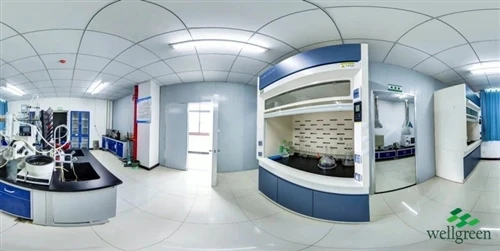
Wellgreen is an innovation-driven manufacturer of herbal extracts since 2011, certified to cGMP, FSSC22000, ISO22000, ISO9001, HACCP, HALAL, KOSHER and Organic EOS&NOP, supplying the nutritional, food and beverage fields from a 70,000 m² plant with in-house extraction and refining lines.
FAQ
Is herbal extract powder the same as ground herb powder?
No. Ground herb powder is dried botanical that has been milled, so it carries the full fibre and variability of the raw plant. An extract powder is produced by extraction, concentration and drying, and is usually standardised to a marker compound or sold on an extraction ratio. They are specified, priced and used differently - the extract gives a more reproducible label claim, the ground herb a larger carrier mass per unit of activity.
Extract ratio or standardised marker compound - which should a buyer specify?
Specify the one your label depends on. A standardised marker gives a defensible, reproducible claim and easier blending; an extraction ratio describes raw-material equivalence but not the concentration of any single compound. Many buyers specify both, then confirm both on the batch certificate. Whichever you choose, name the analytical method, because the same figure produced by different methods is not the same specification.
Which powder properties should be fixed in writing before a bulk order?
Particle size distribution with its method, bulk and tapped density, flow behaviour, wettability or dissolution behaviour, moisture and water activity, and the carrier identity with its proportion. Add contaminant limits for heavy metals, pesticides, residual solvents and microbiology against your destination market. These properties decide whether the material runs on your line, and they are the ones most often left out of a quotation.
What paperwork should travel with an herbal extract powder shipment?
A commercial invoice and packing list that match the declared form, the specification sheet, a batch-specific COA with methods stated, a safety data sheet, and the origin and producing site details. Add allergen, GMO, BSE/TSE and, where they apply, organic, Halal or Kosher certificates for the products that actually hold them. Customs classification should be confirmed with your broker for the specific product and destination rather than carried over from another shipment.
Can powder format fit be validated with a sample before bulk?
Yes, and it is the normal route in this category. Request the exact grade, then run flow, dusting, blending and moisture checks in your own equipment before committing to a commercial volume. Sample and small initial quantities for testing and evaluation are supported, and MOQ is set per project rather than published as a fixed figure.
Whichever grade you shortlist, the ratio or marker, the carrier and the powder properties are what your second order will be judged against - so put them in the specification, not in an email.
Request Specifications & Samples
Tell us the botanical, the grade and your target application, and we will send the specification sheet, batch documentation and a sample plan for your own evaluation.
Email: liu@wellgreenxa.com
Tel/WhatsApp: +86-19890982054
Or use the inquiry form below - we usually reply within 24 hours.
Sources
- U.S. Food and Drug Administration - Q1A(R2) Stability Testing of New Drug Substances and Products (ICH guidance; the reference framework most suppliers work to for stability protocols). https://www.fda.gov/regulatory-information/search-fda-guidance-documents/q1ar2-stability-testing-new-drug-substances-and-products
- U.S. Food and Drug Administration - Dietary supplement ingredient resources. https://www.fda.gov/food/dietary-supplements/information-select-dietary-supplement-ingredients-and-other-substances
