




Selecting a quality assurance and certification-minded plant extract supplier begins with evaluation - specifications, quality systems, logistics, technical support. But evaluation answers how good a supplier is; it does not answer whether the supplier is what it claims to be. This guide covers the verification layer: establishing what entity you are actually buying from, reading the documents behind the price, and qualifying samples before a first order.
Why an Evaluation Framework Alone Does Not De-Risk a Purchase
Evaluation frameworks are useful and widely documented - our own five-step frameworks for the five-step evaluation framework for liposomal vitamin C suppliers and for evaluating a liposome omega-3 supplier cover specifications, quality systems, supply chain, stability and technical support, while strategic procurement criteria addresses the commercial side. This article deliberately does not repeat them.
Evaluation answers "how good"; verification answers "is it"
An evaluation score tells you which of three suppliers looks most capable. It does not tell you whether the certificate on the quotation belongs to the factory that will produce your batch. Those are different questions, and only the second one is answered by evidence you can independently check.
The three failure points that evaluation frameworks miss
In practice, purchases fail for three reasons that no scoring matrix captures: the supplier's legal and operational identity is not what the buyer assumed; the documentation supplied does not correspond to the goods shipped; and the sample that won the order does not represent the bulk that follows. Everything below addresses one of those three points.
Step 1 - Establish What You Are Actually Buying From
Three supplier profiles
Most counterparties fall into three operational profiles: the manufacturer that owns extraction and finishing capacity; the trading company that sources from third parties and consolidates; and the integrated factory that produces some items in-house and sources others. Verification starts by establishing which profile the plant extract supplier you are talking to actually operates - none is inherently better, but each changes what you can verify and what you must ask for.
Verifiable signals
- Business scope and production licence. Check that the licence covers the category you are buying, not just general trade scope.
- Certificate scope. A quality-system certificate is only meaningful if its scope includes the product line in question.
- Capacity claims that reconcile. Stated capacity should be consistent with equipment lists, staffing and typical order volumes.
- Willingness to be seen. Suppliers with nothing to hide accept a remote walk-through - see a remote walk-through of our production site for what that involves.
- Sample provenance. Ask whether the sample comes from a production batch of the exact grade, with its batch number.
| Supplier profile | What you gain | Main risks | Documents to verify in addition |
|---|---|---|---|
| Manufacturer (owns production) | Process control and batch documentation traceable to production; audit and customisation possible | Capacity concentration; confirm the specific product line really is made in-house | Production licence covering the category; batch records; audit access |
| Trading company (sources third-party) | Wide catalogue, flexible volumes, faster availability | Documentation may originate elsewhere; batch provenance harder to trace | Specification control process; origin factory identified on the CoA; change-notification terms |
| Integrated factory (mixed) | Broad product range with in-house capability for part of it | In-house and sourced items may be presented uniformly | Item-by-item statement of what is self-produced and what is sourced |
Step 2 - Read the Documents, Not the Brochure
How to read a COA
The certificate of analysis is the document that ties a result to a batch. Verify that the batch number corresponds to the batch you are buying, that each result states the test method used, and that the limits and the reported results are internally consistent. Establish whether the testing was performed in-house or by a third party, and whether the items tested cover the parameters that matter for your application rather than a generic panel.
What a usable TDS must state
A technical data sheet should state the assay and its method, particle size, packaging format, shelf life and storage conditions, and the regulatory identity of the product. A sheet that lists a figure without a method cannot be compared with another supplier's sheet.
Verifying certificates
For each certificate, check the certificate number, the issuing body, the validity dates and - most often overlooked - the scope. A valid certificate whose scope does not include the product line you are purchasing does not support the claim being made.
Common documentation traps
- A CoA from a previous batch, reused because the numbers look similar.
- A template TDS whose figures do not match the grade quoted.
- A certificate whose scope excludes the product being sold.
- An expired third-party report presented as current.
- Scans with no verifiable certificate number, issued by bodies that cannot be looked up.
| Document | Fields to verify | Common problems |
|---|---|---|
| Certificate of analysis (COA) | Batch number matching your batch; test method per parameter; specification limits and actual results; issue date; in-house or third-party laboratory | COA reused from another batch; method missing; "conforms" with no values; expired third-party report |
| Technical data sheet (TDS) | Assay and method; particle size; packaging; shelf life and storage; regulatory identity | Generic template not matching the quoted grade; figures with no stated method |
| Certificates (quality system, Halal, Kosher, GMP) | Certificate number; issuing body; validity; scope covering your product line | Scope mismatch; expired validity; unverifiable scans |
| Regulatory identity documents | Classification for your destination market | Documentation belonging to a different product |
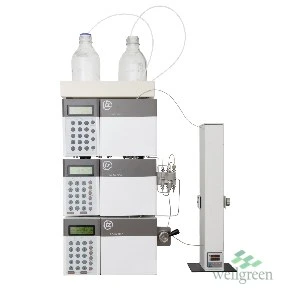
How documentation is produced at the source is covered on our manufacturing facilities page - including which tests are run in-house and where third-party confirmation is used.
Step 3 - Sample Qualification Before the First Order
What to test on a sample
Sample testing has one purpose: to reproduce the supplier's claimed values with your own methods, and to see how the material behaves in your actual matrix. Re-test the key parameters yourself or through a laboratory you commission; then run an application trial under your real process conditions, followed by an accelerated stability check that mimics your intended shelf life.
Define your own release thresholds
Set the acceptance limits yourself, based on your product requirements - not on the supplier's suggested range. Then make sample-to-bulk consistency an explicit condition of the first order: the bulk batch must match the qualified sample within the tolerances you defined, and the batch documentation must support that claim.
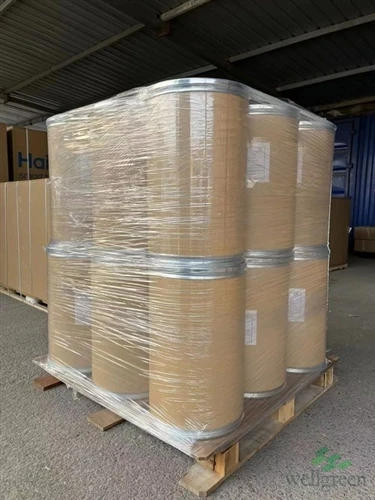
Remote and On-Site Audits
What a remote audit can establish
A structured remote audit - live video through the production areas, sampling of batch records, a walk through the retained-sample room and the laboratory - can confirm that the processes and records described in the documents actually exist, and that the equipment matches the capability claimed.
What only an on-site visit can confirm
Physical inspection confirms the state of extraction, concentration, drying and packing areas; the cleanliness level in practice rather than on paper; the traceability of retained samples and batch records; and the calibration status of testing equipment. If a visit is not practical, an equivalent remote protocol - with unedited footage of each area and on-the-spot document sampling - is the closest substitute. Where your project requires modified specifications, custom formulation support is the stage at which these requirements should be fixed.

Red Flags That Should Pause a Deal
Each of the following is observable before money changes hands, and each is a signal to slow down rather than an automatic rejection when verifying a plant extract supplier:
- A CoA that cannot be matched to the batch you are offered.
- Analytical results stated as "conforms" with no values or methods.
- Certificates whose scope does not cover the product being sold.
- Samples quoted without a batch number, or a sample batch that differs from the proposed bulk batch without explanation.
- Reluctance to allow any form of remote or on-site audit.
- Specifications that shift between versions of the same document without notice.
- Capacity claims that do not reconcile with equipment, staffing or order history.
- Evasive answers to the direct question: is this item produced by you or sourced from another factory?
Wellgreen Technology has manufactured botanical extracts since 2011, with 120+ employees, a 73,000 m² facility, 3,000 MT annual capacity and seven production lines supported by seven extraction vessels; packaging is completed in a Class 100,000 cleanroom, and quality control runs on two HPLC units alongside LC-MS, GC and UV-Vis instruments. The company holds a food production licence, a feed additive production licence, ISO 9001:2015, ISO 22000, HACCP, cGMP, Kosher and Halal certifications.
Frequently Asked Questions
How can I tell whether a plant extract supplier is a manufacturer or a trading company?
Ask which items are produced in-house and request the production licence and certificate scope for each. A manufacturer can match batch documentation to production records and will normally accept a remote walk-through; a trading company should be able to identify the origin factory on the CoA.
What documents should I request from a plant extract supplier before ordering?
A batch-specific CoA, a TDS stating assay and method, the relevant certificates with scope and validity, the regulatory identity documentation for your market, and a sample with its batch number.
How do I read a Certificate of Analysis for a botanical extract?
Match the batch number, check that every result carries a test method, confirm the limits and reported values are consistent, and establish whether testing was in-house or third-party. A CoA without methods cannot be compared across suppliers.
Can a supplier be audited remotely?
Yes, within limits. A remote audit can verify that processes, equipment and records exist as described; a physical visit remains the only way to confirm the actual state of production and storage areas and the calibration of testing equipment.
What should I check in a sample before placing a bulk order?
Reproduce the claimed parameters with your own methods, run an application trial in your real matrix under your process conditions, and set your own acceptance thresholds - then make sample-to-bulk consistency a written condition of the first order.
Request Documents, Specifications and Samples
Tell us the ingredient and target market - we will come back with the specification sheet, the batch documentation you need for your market, and a sample plan for your own evaluation. You can also contact our technical team directly. Commercial terms, including pricing and minimum order quantities, are quoted case by case.
- Email: liu@wellgreenxa.com
- Tel / WhatsApp: +86-19890982054
Long-term supply partnerships welcome; trial orders and sample evaluation supported. Typical reply within 24 hours.
