




Buying hibiscus flower extract in bulk is a form-selection decision before it is a price decision. The same flower reaches the market as dried calyx, as milled powder, as a liquid or spray-dried extract, and as a standardised grade quoted against a marker compound - and those four are not interchangeable in a formulation, in a warehouse, or on a label. This guide is written for the buying side: procurement, product development and quality teams who have to write the specification, compare quotations on equal terms, and choose between suppliers who describe material in different vocabularies. It covers what the forms actually are, which parameters belong in a specification, the questions that separate a manufacturer from a trader, bulk packaging and stability, and how to match form to application.
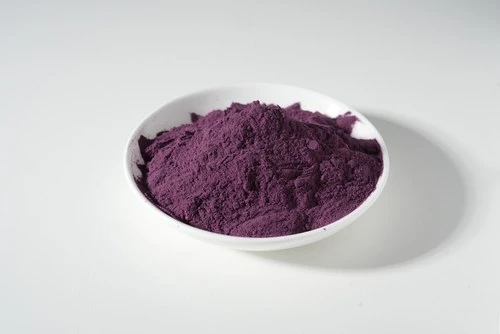
What "Hibiscus Flower Extract" Actually Covers: Whole Calyx, Powder, Extract and Standardised Forms
Trade enquiries for this ingredient often use one name for four different products. In practice the commercial forms divide as follows, and the first job in a sourcing brief is to state which one you mean.
Dried calyx vs. powder vs. extract vs. standardised anthocyanin
Dried calyx is the botanical material itself, sorted and dried. Powder is that material milled to a stated mesh. Extract is the material after a solvent or aqueous extraction step, then concentrated and usually dried onto a carrier. A standardised grade is an extract quoted against a defined marker - for this material, typically the anthocyanin fraction - so that a buyer is contracting for a measured attribute rather than for a botanical name.
Which form fits which brief
The right answer follows the formulation brief, not a general ranking. Our hibiscus flower extract grade listing is one place to see how these forms are presented for trade buyers. A dry blend or a tea-style application is usually served by powder. A beverage or a liquid concentrate is usually served by an extract that dissolves cleanly in the system the formulator has already specified. A product with a declared marker content is served by a standardised grade, because that is the only form where the specification can be verified against a number. Buyer-side searches for this ingredient surface mostly consumer material; the parameters below are what a trade buyer should anchor on.
| Form | What it is | Specification focus | Where it fits |
|---|---|---|---|
| Dried calyx | Sorted and dried botanical material | Moisture, foreign matter, microbial load, pesticide residue, packing form | Infusion-style and whole-material applications |
| Powder | Dried material milled to a stated mesh | Particle size and distribution, moisture, bulk density, microbial and heavy-metal limits | Dry blends, tablet and capsule fills, dusting and coating |
| Extract | Extracted and concentrated, usually dried onto a carrier | Extract ratio basis, carrier identity, solvent residue, solubility, pH in solution | Beverage, liquid and emulsified systems |
| Standardised grade | Extract quoted against a defined marker | Marker content and its test method, ratio basis, carrier, batch-to-batch tolerance | Products with a declared content claim to support |
Specification Checklist: What Buyers Should Ask For
A quotation becomes comparable only once both parties are describing the same parameters. The list below is the one that works for this material; the values themselves belong to your development and quality teams, and every figure should be confirmed on the batch certificate of analysis rather than assumed from a catalogue page. A worked view of how these parameters sit on a single grade is set out on our hibiscus flower extract powder page.
Quality parameters
- Marker content and its basis. Where a marker is declared, agree both the value and the analytical method used to obtain it - and agree the basis, because a figure expressed against the extract and a figure expressed against the finished powder are not the same number.
- Extraction solvent. State whether the route is aqueous, hydro-alcoholic or another solvent system, and require solvent residue data where the route uses one.
- Particle size. Specify mesh or a distribution, not just "fine powder". Particle size drives blending uniformity, dusting and flow in your line.
- Moisture and ash. These two decide caking behaviour and shelf-life drift in humid climates, and they are cheap to test.
- Carrier and flow agent. Where the grade is dried onto a carrier, the carrier identity is part of the specification and part of the label arithmetic.
Safety and compliance documents
- Microbiological limits and specified organisms, tested against the framework of your destination market.
- Heavy metals and pesticide residues, with the method stated.
- Residual solvents where relevant to the extraction route.
- Allergen and GMO statements. Whether a botanical material is a regulated allergen is a determination for your destination market's authorities, not for a supplier - and not for this article. Ask what the material contains and let your regulatory adviser classify it.
What belongs in a batch COA
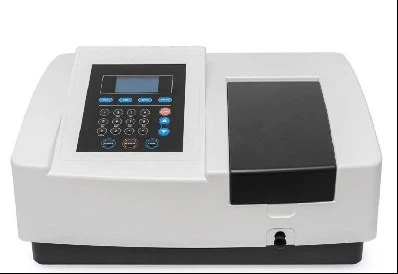
A usable certificate names the batch, the grade, the assay with its method, moisture, ash, contaminant results and the carrier. It should also state what was tested on every batch and what was tested once at qualification - a parameter that appears only on a qualification report is not controlled.
Choosing a Hibiscus Supplier: Questions That Separate Manufacturers from Traders
The general verification layer - business scope, certificate scope, COA reading, sample qualification - is covered in our verifying a plant extract supplier note and applies unchanged here. When you shortlist suppliers for hibiscus flower extract, four questions do most of the sorting.
- Process control. A supplier that runs its own extraction and drying can answer specification questions directly. One that blends and repacks purchased extract can still be a good partner, but you should know which questions travel upstream and how long an answer takes.
- Batch record. Ask for two or three recent COAs for this grade and compare them against each other. Variance across recent batches predicts your next order better than any single certificate.
- Standardisation basis. Ask how the batch is standardised and what tolerance is accepted. A grade that is blended up to a declared value behaves differently from one whose value is a natural outcome of the raw material.
- Routine testing. What a supplier tests on every lot defines what you can audit. If the parameters you care about are not on the routine COA, they are not controlled - whatever the specification sheet says.
When comparing a hibiscus powder supplier, hibiscus powder manufacturers or a hibiscus extract supplier, compare like with like: cost per kilogram is only meaningful once form, carrier and marker basis are identical.
Bulk Packaging, Storage and Stability
Once the grade is fixed, the purchase runs on packaging and paperwork. A hibiscus powder bulk order - including an organic hibiscus powder bulk grade, where that option applies and its certificate scope has been confirmed - should state the packaging configuration, the liner, and the storage conditions the declared shelf life assumes.
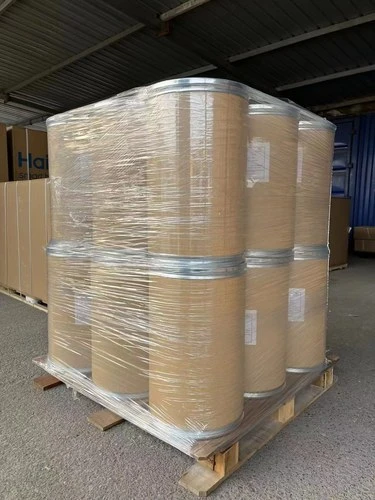
- Packaging. Fibre drums or cartons with a food-grade inner liner are the common bulk configuration; the liner is what protects the material from moisture pickup in transit.
- Storage. Cool, dry and protected from light, with containers kept closed between dispensing operations. Powder grades are hygroscopic to varying degrees, and a humid filling room is a more common cause of spoilage than warehouse conditions.
- Shelf life. Ask what the declared shelf life assumes - temperature, humidity, light protection, packaging - and confirm the assumption matches your own warehouse rather than an ideal one.
- Trade documents. Specification sheet, batch COA with methods stated, safety data sheet, country of origin and producing site, plus the statements your market requires. Customs classification is market-specific: confirm the code your broker applies to the ingredient in its declared form, because classification depends on composition, form and destination.
Applications and How to Match Form to Application
Form selection is where most avoidable cost sits in this category. The same botanical can serve a colour application and a nutritional one, and the form that suits one may be a poor fit in the other - which is why the specification follows the application.
- Beverage and liquid systems. Solubility, clarity and pH behaviour in the finished system decide the choice, and an extract usually fits more cleanly than a milled powder.
- Dry blends, capsules and tablets. Particle size, bulk density and flow decide. A powder that segregates in the blender will not produce a uniform fill weight.
- Colour applications. Where the material is used for colour, the parameters shift toward colour measurement and stability across the shelf life rather than toward marker content. Our natural food colorant selection note covers that selection logic.
- Nutritional applications. The deciding items are the standardisation basis and the documentation behind it. Any claim carried on the finished product is governed by the destination market's rules and must be substantiated by the brand owner - documentation supports a claim, it does not create one.
One practical rule: fix the form against the inclusion rate and the process the material will pass through, then compare quotations on that single form. Comparing a powder quotation with an extract quotation tells you nothing except which supplier reads your brief more carefully.
FAQ
Is hibiscus flower extract the same as hibiscus powder?
No. Powder is the dried material milled to a stated mesh. Extract is the material after an extraction step, usually concentrated and dried onto a carrier. They are bought, specified and priced as different products, and a specification written for one does not transfer to the other.
What does "bulk" mean here, and how is the material packed?
In trade use, bulk means buying at industrial quantity rather than in consumer packs, normally in fibre drums or cartons with a food-grade inner liner. The packaging configuration, liner and net weight should be written into the order rather than assumed, because the liner is what protects the material in transit.
How is marker content expressed, and how is it confirmed batch to batch?
It is quoted as a value against a stated basis - the extract or the finished powder - and must be paired with the method used to measure it. Confirmation happens on the batch COA, and the number that binds is the one on the certificate for the lot you receive, not the one in the catalogue.
Which documents should accompany a bulk shipment?
A specification sheet for the exact grade, a batch-specific certificate of analysis with methods stated, the safety data sheet, microbiological and contaminant results, carrier and allergen statements, and the country of origin and producing site. Whether a particular statement is required depends on your destination market.
Can the same material serve both colour and nutritional applications?
Often yes, but the specification is not the same. Colour work is decided by colour measurement and stability; nutritional work by the standardisation basis and its documentation. Confirm which use the grade was standardised for before comparing offers.
Request Specifications & Samples
Tell us the form, the application and your target market, and we will send the specification sheet, batch documentation and a sample plan for your own evaluation. Sample and small initial quantities for testing are supported; MOQ is set per project rather than published as a fixed figure.
Email: liu@wellgreenxa.com | Tel/WhatsApp: +86-19890982054 | We usually reply within 24 hours.
If your project needs a finished format rather than a raw material, our OEM and custom manufacturing service covers formulation and packing.
Sources
- U.S. Food and Drug Administration - Dietary supplement ingredient resources. https://www.fda.gov/food/dietary-supplements/information-select-dietary-supplement-ingredients-and-other-substances
- U.S. Food and Drug Administration - Q1A(R2) Stability Testing of New Drug Substances and Products (ICH guidance on stability testing). https://www.fda.gov/regulatory-information/search-fda-guidance-documents/q1ar2-stability-testing-new-drug-substances-and-products
