




Ellagic acid is bought on an assay specification, not on an extraction ratio, and that single difference changes how a quotation has to be written, tested and accepted. Where a 10:1 botanical extract is contracted by mass against a stated process, an assayed ingredient is contracted against a measured content figure obtained by a named analytical method - so the method, the basis and the batch certificate carry most of the commercial weight. This guide is for procurement, product development and quality teams: it separates the specification languages used in this category, covers the source material and extraction route, sets out the parameters and documents worth demanding, and matches grade to application.
Ellagic Acid: An Assay-Standardised Ingredient, Not a Ratio Extract
Three specification languages are in use across botanical ingredients, and they are not interchangeable. Getting the category right in the first line of an enquiry is what makes the rest of the comparison meaningful.
How an assay specification differs from a 10:1 ratio claim
A ratio - 10:1, 20:1 - states how much raw material produced one part of finished extract. It is a statement about the process and about mass balance, and it carries no information about the level of any individual compound. An assay specification works the other way round: it fixes a content figure for a defined compound or class of compounds and requires an analytical method capable of measuring it. A supplier can hold a ratio steady and still deliver material that varies in content, and can hold an assay steady while the ratio moves. The two lines answer different questions, so a brief should say which one governs acceptance.
Reading a grade such as 90% - what it does and does not tell a buyer
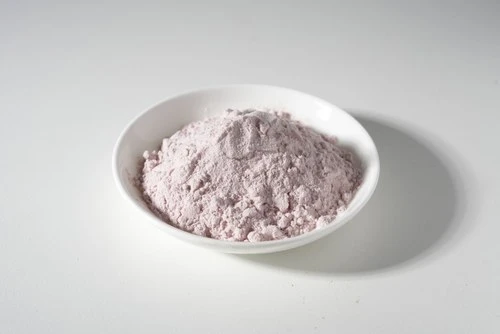
A grade number is a content declaration, and it is only as strong as the three things behind it: the basis it is expressed against, the method used to measure it, and the sampling plan the batch was tested under. Read it as the start of a set of questions rather than as a finished specification. Ask whether the figure is on a dry basis, whether it refers to the extract or to the blended finished powder, which method produced it, and whether it is measured on every lot or was established once at qualification. Our own ellagic acid powder page declares a 90% content grade alongside its botanical source and test method - that is the shape of the declaration to look for, and the value that binds is the one on the certificate for the lot you receive.
| Material | What the specification fixes | How acceptance is decided | Where it fits |
|---|---|---|---|
| Assay-standardised ingredient | A content figure for a defined compound, with the analytical method | Against the declared value and method on the batch certificate | Briefs with a declared content to support and a need for reproducible input |
| Ratio extract (for example 10:1) | The raw-material-to-extract ratio and the process behind it | Against the stated ratio, plus whatever content parameters you add to it | Briefs where the process basis is agreed and content is secondary |
| Whole fruit powder | Identity of the raw material, milling and hygiene parameters | Against botanical identity, mesh, moisture and contaminant limits | Briefs that want the whole matrix, at a larger inclusion rate |
The three are priced and tested differently, and a specification written for one does not transfer to another. State the category, the declared content and the method in the enquiry, and ask the supplier to confirm all three back in writing.
Source Material and Extraction Route: Why Pomegranate Leads
Two variables change a specification more often than any other: where the molecule comes from, and how it is pulled out of the raw material. Both belong in the enquiry, because both change what the specification means.
Punica granatum as the commercial source
Commercial material is normally declared against a botanical source rather than a synthetic route, and for this ingredient the source most often named in trade documentation is pomegranate. Declaring the source is not a formality: content, accompanying compounds and the economics of the extract all follow the raw material, so a specification that names the source is easier to audit than one that names only the compound. Ask for the declared Latin name and the plant part used, and compare that against the certificate for the shipment.
Solvent extraction and what it implies for residual-solvent questions
Extraction type is part of the specification, not a manufacturing detail. A solvent route should be declared, and where a solvent is used the buyer should ask for residual-solvent data with the method stated, because the acceptable limits are set by the destination market rather than by the supplier. This is also where the raw material connects to the economics: material with a lower naturally occurring content needs more input and more processing per kilogram of finished extract. Where a brief also covers a berry-derived colour ingredient, our raspberry extract guide works through the ratio-extract side of the same sourcing decision.
Specification Checklist: Assay Method, Particle Size and Documents
The general verification layer - business scope, certificate scope, COA reading and sample qualification - is covered in our note on verifying a plant extract supplier. When comparing an ellagic acid supplier or ellagic acid manufacturers, compare like with like: a price per kilogram only becomes meaningful once the declared content, the basis and the analytical method are identical.
HPLC and why the test method must be stated
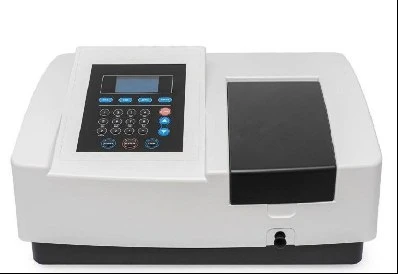
Chromatographic methods are the working standard for quantifying a defined compound in a botanical matrix, and the method is as much a part of the specification as the number itself. Two laboratories can return different values for the same lot if the extraction procedure, the reference standard or the detection wavelength differs, so a content figure without a method cannot be compared with anything. Ask for the method in writing and confirm that the same method is used on the routine certificate.
Mesh, appearance, moisture - what to request rather than assume
Physical parameters decide whether the material behaves in your line. Mesh, or a particle-size distribution, controls blending uniformity and flow; appearance belongs on the specification because a shift in colour or form signals a changed process; moisture and ash drive caking behaviour and shelf-life drift. None of these should be inferred from a product description - request the value, the tolerance and the test method.
What belongs in a batch COA
A usable certificate names the batch, the grade, the declared content value with its method, moisture, ash, particle size where specified, contaminant results, the botanical source and the carrier. It should also distinguish routine testing from qualification testing, because a parameter measured once is not a controlled parameter.
Bulk Packaging, Storage and Stability
Once the grade is fixed, the purchase runs on packaging and paperwork, and it is worth settling both before the order rather than after it.
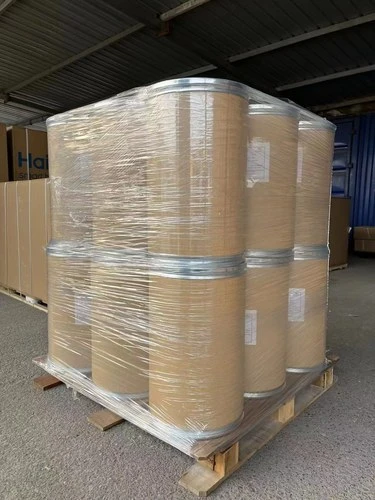
- Packaging. Fibre drums or cartons with a food-grade inner liner are the standard configuration for powder grades. State the liner and the net weight in the order rather than leaving them to convention.
- Storage. Cool, dry and protected from light, with containers closed between dispensing operations. Assayed botanical powders are commonly hygroscopic, and moisture pickup in a humid filling room causes more out-of-specification results than warehouse conditions.
- Shelf life. Ask what the declared shelf life assumes - temperature, humidity, light protection and packaging - and check it against your own storage.
- Documents. Specification sheet for the exact grade, batch COA with methods stated, safety data sheet, country of origin and producing site, plus the statements your destination market requires. Customs classification depends on composition, form and destination, so confirm the code your broker applies in the declared form.
Applications and Grade Fit
Grade fit is a question of matching the specification language to the brief rather than ranking materials against each other. The practical checks are the same in every case: confirm the declared grade, the basis it is expressed against, and whether the destination market permits the material for the intended use. Suitability for a particular application is a determination for that market's authorities and for your own regulatory review - not for a supplier.
- Dry blends, capsules and tablets. Particle size, bulk density and flow decide. Confirm the mesh you will run in production and request a sample at that mesh.
- Beverage and liquid systems. Solubility, clarity and pH behaviour in the finished base decide the fit, and that behaviour should be measured in your own system rather than inferred from a specification sheet.
- Briefs with a declared content. The deciding items are the standardisation basis, the analytical method and the documentation behind them. Any claim carried on a finished product is governed by the destination market's rules and must be substantiated by the brand owner.
- Briefs that sit inside a wider formula. Where this ingredient is one component of a multi-ingredient product, the sourcing logic follows the wider platform; our overview of nutraceutical ingredient sourcing covers that layer.
FAQ
Is ellagic acid the same as urolithin A?
No. They are different substances, and the distinction matters commercially as well as technically: one is the plant-derived compound that appears in botanical extracts, while the other is a metabolite formed downstream. A specification, a certificate or a quotation written for one does not describe the other, so check that the declaration names the substance you intend to buy.
What does a grade such as 90% actually mean, and how is it verified?
It is a declared content figure for the specified compound. Verify it by asking for the basis it is expressed against, the analytical method used to obtain it, and a representative chromatogram with a batch result - then confirm the value on the certificate of analysis for the lot you receive, because that is the figure that binds.
Which raw material is it extracted from, and does the source change the specification?
Commercial material is normally declared against a botanical source, and the Latin name and plant part used belong on the specification. The source affects the material, because content and accompanying compounds follow the raw material, so a specification that names the source is easier to audit.
What should I request from an ellagic acid supplier or manufacturer?
A specification sheet for the exact grade, the declared content value with its analytical method, several recent batch certificates so they can be compared against each other, the physical parameters including mesh and moisture, contaminant results, and the origin and producing site. Then qualify with a sample at the grade you intend to buy.
Which documents accompany a shipment, and does the declared grade affect them?
A specification sheet, a batch-specific certificate of analysis with methods stated, the safety data sheet, and the allergen, GMO and origin statements your destination market requires. The declared grade changes what the certificate has to say - a content declaration needs its method printed alongside it - but not the document set itself.
Request Specifications & Samples
Tell us the ellagic acid grade, the declared content basis and the application, and we will send the specification sheet, batch documentation and a sample for your own evaluation. Small initial quantities for testing are supported; MOQ is set per project rather than published as a fixed figure.
Email: liu@wellgreenxa.com | Tel/WhatsApp: +86-19890982054 | We usually reply within 24 hours.
If your project needs a finished format rather than a raw material, our OEM and custom manufacturing service covers formulation and packing.
Sources
- United States Pharmacopeia - Dietary Supplements & Herbal Medicines: compendial monographs, general chapters and reference standards used to specify and verify botanical ingredients. https://www.usp.org/dietary-supplements
- AOAC INTERNATIONAL - analytical methods, method validation guidance and proficiency testing programmes for food and dietary supplement testing. https://www.aoac.org/
- European Commission - Food supplements: the harmonised EU rules under Directive 2002/46/EC, including the permitted lists and notification arrangements that apply to supplement products placed on the EU market. https://food.ec.europa.eu/food-safety/labelling-and-nutrition/food-supplements_en
