




Beet root powder is produced from the root of Beta vulgaris and supplied as a powder for food, beverage and supplement applications. It is used as much for its colour as for its composition: the root carries one of the highest concentrations of betalain pigment found in a commercial crop.

Composition
The characteristic compound is betanin, a betalain pigment responsible for the deep red colour. Betalains differ from anthocyanins and carotenoids: they are water-soluble, nitrogen-containing pigments, and they are not pH-sensitive in the way anthocyanins are, which is part of why beet root colour behaves predictably in beverage systems. Betanin content is therefore a common specification item alongside colour value.
Beyond the pigment, the root contains dietary nitrate, folate, manganese and a polyphenol fraction. The nitrate content is the most discussed constituent in the sports nutrition literature, and it is also the one most affected by growing conditions and by the processing route.
The nitrate pathway, described
Dietary nitrate from the root is reduced in the body to nitrite and then to nitric oxide by a sequence of enzymatic steps. Nitric oxide is a signalling molecule involved in vascular tone, and the published work on beetroot has largely been built around measuring that pathway. This is well-established biochemistry and it explains why beet root material is studied in exercise and vascular research settings. It is a mechanism description, not a health claim, and the distinction matters: describing how a compound behaves in the body is not the same as stating what a product does for a consumer.
Powder compared with fresh juice
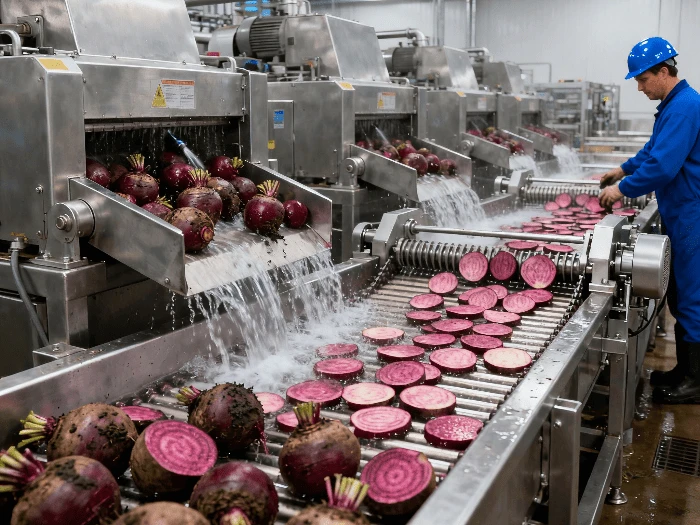
For manufacturers, the powder offers three practical differences from fresh juice. It is more concentrated by weight, so less material is needed per unit of finished product. Betanin is more stable in the dry state, provided the powder is held under low moisture and protected from light. And it is easier to incorporate: it disperses into dry blends, capsules and gummies, where a juice would introduce water and shorten shelf life.
Applications
Beet root powder is used as a natural red colourant and as a base ingredient in powdered beverage and wellness shot blends, in sports nutrition powders and gels, in functional food and confectionery, and in dietary supplement capsules. Because the same material supplies both colour and a nitrate fraction, formulators frequently specify it on colour value and nitrate content together.
Quality Documentation
Manufacturing is carried out under ISO9001, ISO22000, FSSC22000, HACCP, cGMP and FAMI-QS management systems, and the product range is certified for HALAL, KOSHER, NOP and EOS (organic) where applicable. Each batch is released against a batch-specific Certificate of Analysis, and MSDS and specification sheets are available on request to support your internal regulatory review. Certificates are available on request.
Related products
Wellgreen supplies red beet root powder standardised on betanin, grape seed extract and apple fruit powder for the same application areas.
Samples and Enquiries
Evaluation samples are available for qualified enquiries. For specifications, documentation or a quotation, contact our sales team at liu@wellgreenxa.com.
This page describes an industrial botanical ingredient for business-to-business use. It is not intended to diagnose, treat, cure or prevent any disease, and is not intended for direct consumer use.
