




Raspberry extract is one of the most ambiguous line items a buyer can put on a purchase order, because the same two words describe three products that share no specification, no cost basis and no supplier base. A flavouring, a botanical ratio extract and a standardised raspberry ketone all answer to that name, and a quotation that does not say which one is being offered cannot be compared with anything. This guide is for procurement, product development and quality teams: it separates the three products, sets out what belongs in a specification for a ratio grade, and covers supplier questions, packaging, stability and application fit.
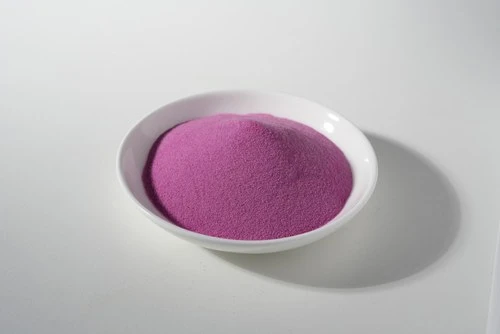
"Raspberry Extract" Is Three Different Products: Flavour Extract, Botanical Extract and Ketone
Trade enquiries for this ingredient routinely use one name for three commercial categories, and the first job in a sourcing brief is to say which one is meant. The confusion is not a buyer's error: buyer-side searches for the phrase return bakery and grocery results rather than trade grades, so the vocabulary in circulation is the vocabulary of flavouring. The table below closes that gap before a quotation is requested.
How the trade names diverge
A flavouring extract is produced for taste and aroma. It is judged on sensory profile, often supplied as a liquid or a preparation on a carrier, and its regulatory identity is that of a flavouring rather than a botanical ingredient. A botanical ratio extract is made by extracting raspberry material, concentrating it and drying it, and is traded by mass on a stated ratio such as 10:1. Raspberry ketone is a single defined compound, quoted against a declared content figure. The three are bought by different people, tested by different methods and priced on different bases.
| Product | What it is | Typical trade form | What the enquiry must state |
|---|---|---|---|
| Flavouring extract | A concentrate prepared for taste and aroma | Liquid, or a flavouring preparation on a carrier | The target flavour profile, the application and the flavouring rules of your market |
| Botanical ratio extract | Plant material extracted, concentrated and dried; quoted on an extraction ratio such as 10:1 | Powder, usually dried onto a carrier | The ratio basis, carrier identity, marker or anthocyanin parameters, particle size |
| Raspberry ketone | A single defined compound, standardised and quoted against a declared content value | Standardised powder, often inside a blend | The declared content figure, the method behind it, and the batch certificate |
A specification written for one of these does not transfer to another. Confirm form, ratio basis and declared content on the specification sheet for the exact grade you intend to buy.
Naming the grade before you request a quotation
The working rule is to name the product category, the form and the basis in the first sentence of the enquiry, then ask the supplier to confirm each item in writing. Our own grade is a raspberry extract supplied as a powder on a 10:1 ratio basis: a botanical extract, not a flavouring and not a ketone, with the parameters published for trade buyers on that page. Being explicit from the start removes the most common source of misquotation here.
Specification Checklist for a Ratio Extract
The general verification layer - business scope, certificate scope, COA reading and sample qualification - is covered in our note on verifying a plant extract supplier. What follows is specific to a grade traded on an extraction ratio.
What a 10:1 ratio does and does not tell you
An extraction ratio states how much raw material went in per unit of finished extract. It is a process statement, genuinely useful when comparing two offers built the same way, but it is not a content figure. Two 10:1 materials made from different parts of the plant, or from different raw-material lots, can differ considerably in the proportion of any individual compound. A ratio also says nothing about the carrier, the particle size or the standardisation basis. Ratio and content are separate questions, and both need an answer before a quotation is comparable.
Colour and anthocyanin parameters
Raspberry carries an anthocyanin fraction, and that fraction is what berry ingredients are most often specified on when colour is part of the brief. Settle first whether the function is colour or content, because the parameters diverge: a colour brief is decided by colour measurement and how it holds across the shelf life, while a content brief is decided by a declared value with its basis and its method. Fix the basis in writing, because a figure expressed against the extract and one expressed against the finished powder are not the same number. Anthocyanins respond to pH, heat, light and oxygen, so ask what storage conditions the specification assumes.
What belongs in a batch COA
A usable certificate names the batch, the grade, the ratio basis, any declared content value with its method, moisture, ash, particle size where specified, contaminant results and the carrier. It should also separate what is tested on every lot from what was tested once at qualification, because a parameter that appears only on a qualification report is not controlled.
Supplier Questions: Extractor, Blender or Trader
Offers for the same raspberry extract can come from three quite different kinds of business, and the questions that separate them are practical rather than formal.
- Extractor. Runs extraction, concentration and drying in its own plant. It can answer process questions directly, including how an extraction ratio is controlled and what drives batch-to-batch variation.
- Blender or formulator. Buys extract and then standardises, blends or repacks it. This can be the right partner for a custom specification, provided you know which parameters travel upstream.
- Trader. Resells material it did not make. A trader can be a legitimate route to market, but the documentation should be traceable to the producing site.
Four questions do most of the sorting, whichever type you are dealing with. Who physically controls extraction and drying? Can you send two or three recent certificates for this exact grade, so they can be compared against each other? How is the batch standardised, and what tolerance is accepted? And what is tested on every lot - because a parameter that is not on the routine certificate is not controlled. A buyer evaluating a raspberry ketone supplier is asking a further question on top of these, since that material is contracted against a declared content rather than a ratio.
Where the material is being selected for a colour function rather than a content function, the same logic applies but the parameter set changes; our hibiscus flower extract bulk sourcing guide works through form selection for a botanical colour ingredient from that angle.
Bulk Packaging, Storage and Stability
Once the grade is fixed, the purchase runs on packaging and paperwork. A bulk order should state the packaging configuration, the liner and the net weight rather than leaving them to convention.
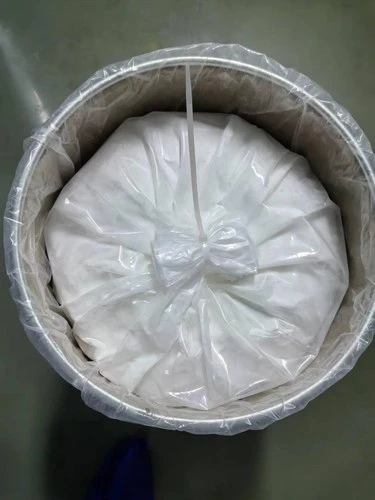
- Packaging. Fibre drums or cartons with a food-grade inner liner are the common configuration. The liner, not the drum, is what limits moisture pickup in transit.
- Freeze-dried and milled grades. A freeze dried raspberry powder bulk grade behaves differently from an extract powder: it carries more of the whole fruit, including fibre, and is generally more hygroscopic and more prone to caking. If the brief calls for that form, specify the moisture limit and the mesh; regard any raspberry powder bulk grade bought on a description as unverified.
- Storage. Cool, dry and protected from light, with containers closed between dispensing operations. For anthocyanin-bearing material this is not a formality: light, heat and oxygen all move the colour.
- Shelf life. Ask what the declared shelf life assumes - temperature, humidity, light protection and packaging - and check it against your own storage.
- Documents. Specification sheet for the exact grade, batch COA with methods stated, safety data sheet, country of origin and producing site, plus the statements your destination market requires. Customs classification depends on composition, form and destination, so confirm the code your broker applies to the material in its declared form.
Applications: Beverage, Colour and Supplement Briefs
Form selection is where most avoidable cost sits, because the same botanical answers a colour brief and a content brief with different specifications.
- Beverage and liquid systems. Solubility, clarity and pH behaviour in the finished base decide the choice, and an extract that dissolves cleanly usually fits better than a milled powder. Expect colour to shift with pH, and test it in your own system.
- Colour applications. The parameters shift toward measured colour and its stability across the shelf life. Whether a preparation may be used as a colour in a given market is a determination for that market's authorities; our natural food colorant selection note covers that selection logic.
- Dry blends, capsules and tablets. Particle size, bulk density and flow decide. A powder that segregates in the blender will not produce a uniform fill weight.
- Supplement briefs. The deciding items are the standardisation basis and the documentation behind it. Any claim carried on a finished product is governed by the destination market's rules and must be substantiated by the brand owner.
Fix the form against the inclusion rate and the process the material will pass through, then compare quotations on that single form.
FAQ
Is a raspberry flavouring extract the same product as a botanical raspberry extract?
No. A flavouring extract is produced for taste and aroma and is regulated as a flavouring; a botanical extract is a food or supplement ingredient traded by mass on an extraction ratio or a declared content. They have different specifications, test methods and documents.
What does a 10:1 ratio actually mean?
It means ten parts of raw material were used to produce one part of finished extract. It describes the process, not the content: it does not tell you the level of any individual compound, the carrier, the particle size or the standardisation basis. Read it as one line of the specification and ask for the content parameters separately.
Is raspberry ketone the same ingredient as a 10:1 extract?
No. Raspberry ketone is a single defined compound, quoted against a declared content value; a 10:1 botanical extract is a plant-derived material traded on an extraction ratio. They are different products with different supplier bases, so establish which one a quotation refers to before comparing anything.
How should colour or anthocyanin content be specified and confirmed batch to batch?
Agree the value, the basis it is expressed against and the analytical method used to obtain it, then confirm the figure on the batch certificate for the lot you receive. The number that binds is the one on that certificate, not the one in a catalogue.
Which documents should accompany a bulk shipment?
A specification sheet for the exact grade, a batch-specific certificate of analysis with the test methods stated, the safety data sheet, and the allergen, GMO and origin statements your destination market requires. Whether a statement is mandatory depends on that market, so route the question through your own regulatory adviser.
Request Specifications & Samples
Tell us the form, the ratio or content basis and the application, and we will send the specification sheet, batch documentation and a sample for your own bench trial. Sample and small initial quantities for evaluation are supported; MOQ is set per project rather than published as a fixed figure.
Email: liu@wellgreenxa.com | Tel/WhatsApp: +86-19890982054 | We usually reply within 24 hours.
If your project needs a finished format rather than a raw material, our OEM and custom manufacturing service covers formulation and packing.
Sources
- European Food Safety Authority - Food colours: EU framework, E-number labelling and the re-evaluation of authorised food colours. https://www.efsa.europa.eu/en/topics/topic/food-colours
- U.S. Food and Drug Administration - Regulatory Status of Color Additives: searchable database of colour additives permitted for use in foods, drugs and cosmetics in the United States. https://www.fda.gov/industry/color-additive-inventories/color-additive-status-list
- European Commission - Food and Feed Information Portal: Food additives database, the EU list of authorised additives and their conditions of use. https://ec.europa.eu/food/food-feed-portal/screen/food-additives/search
