




Specifying alpha GPC powder starts with one question that has nothing to do with price: which grade are you buying? The material is sold under a small number of commercial designations that differ in concentration, physical form and how they behave in a capsule or a blend - and two quotations for the "same" product can be describing different things entirely. This guide is written for procurement teams, product developers and quality managers at supplement brands, contract manufacturers and private-label suppliers who have to settle that question in writing. It covers what the ingredient is, how the commercial grades differ, the specification items to fix, how bulk orders are packed and documented, and where each form fits across applications.
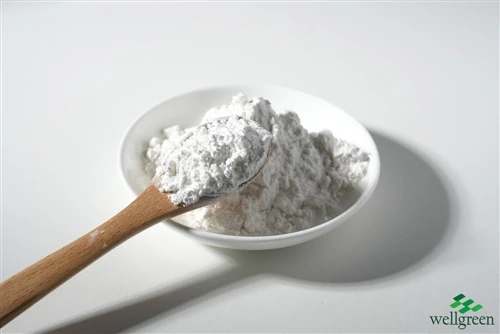
What Alpha GPC Powder Is - and Why Buyers Specify It by Grade
Alpha GPC is a choline-containing compound - the short trade name for L-alpha-glycerylphosphorylcholine - supplied to formulators either as a powder or as a liquid concentrate. It is a defined, single-molecule ingredient rather than a botanical extract, which means the specification is built around identity, assay and physical form rather than around a plant source and a harvest.
That distinction explains why buyers specify it by grade. Three things vary between the commercial designations, and each one changes what you can do with the material:
- Concentration. A higher-concentration grade delivers the same active mass in a smaller dose weight, which matters when the capsule or stick pack has a fill limit.
- Physical form. Powder grades are the default for solid dosage; liquid grades suit formats where a solution is easier to handle than a powder.
- Handling behaviour. Powder grades are hygroscopic to a degree that has to be characterised, and the higher-concentration grades are the ones where moisture pickup shows up fastest in production.
The practical consequence is that "alpha GPC" is not a specification. The grade, the assay and the analytical method behind it are the specification, and the checks below are how you pin them down before a commercial order.
50% vs 99%: Choosing the Right Alpha GPC Grade
The two powder designations most often quoted are the 50% grade and the 99% grade, and the choice between them is driven by dose weight and process fit rather than by preference. The 50% grade is typically a diluted or carried form, which is easier to handle at larger inclusion weights; the 99% grade concentrates the active so that the same dose occupies less mass. A liquid grade is the third option and is covered in the table.
One caution before the comparison: the numbers in these grade names describe the designation under which the material is traded, not a figure you should carry into your own documentation. Confirm the actual content, its analytical method and the batch value with the supplier, and take your specification from the certificate of analysis for the lot you receive.
| Grade | Form and handling to fix | Specification focus | What to request |
|---|---|---|---|
| 50% powder | Free-flowing powder; higher dose weight per unit of active | Content with method, carrier identity and proportion, particle size distribution, moisture | Specification sheet for the exact grade, plus batch COA with methods stated |
| 99% powder | Concentrated powder; lower dose weight, more sensitive to moisture pickup | Content with method, moisture and water activity, particle size, residual solvents where applicable | Batch COA, stability data, and the packaging the shelf life assumes |
| 85% liquid | Liquid concentrate; dosing by weight or volume with its own stability profile | Content with method, density, pH, water content, microbiological limits | Batch COA, density and pH data, and storage conditions stated in writing |
The liquid alpha GPC grade is worth considering wherever a powder creates a handling problem - a small-dose stick pack, or a blend where an additional solid would disturb the fill weight. Neither form is inherently better; the right answer follows from the format you are filling.
Specification Checklist: What to Ask an Alpha GPC Supplier For
The items below are what makes two quotations comparable. Values belong to your own development and quality teams and should be confirmed on the batch certificate of analysis rather than taken from a catalogue page.
- Identity and content, with the analytical method. Ask for the method and a representative chromatogram, not only a figure.
- Moisture and water activity. The parameters that decide caking, flow and shelf-life drift for a hygroscopic powder.
- Heavy metals and residual solvents. Set against your destination market, tested per batch rather than declared once.
- Microbiological limits. Total aerobic count, yeast and mould, and the specified organisms your market requires.
- Particle size distribution. Governs blending uniformity and dosing accuracy in your line.
- Carrier or diluent, where the grade includes one, with its identity and proportion stated.
- Registry identifiers. Ask the supplier to state the substance identifiers they use on their documentation and verify them against the same supplier's own specification - use their identifiers rather than assuming any value.
When you evaluate an alpha GPC supplier, apply the same general discipline as for any defined ingredient: business scope, certificate scope, certificate-of-analysis reading and sample qualification. Our note on verifying a supplement ingredient supplier sets that process out; for a defined compound the specific addition is that identity evidence matters more than botanical provenance, so mass-spectrometry and chromatographic data carry most of the weight.
Bulk Sourcing Mechanics: Packaging, Stability and Documentation
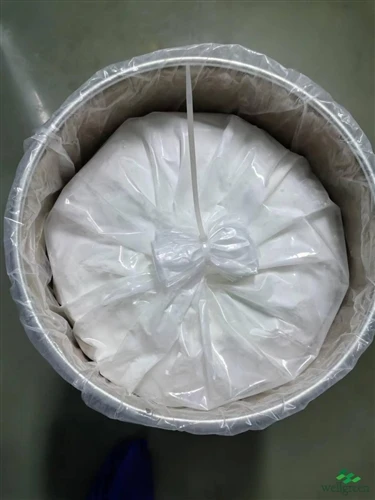
Once the grade and specification are fixed, the purchase runs on packaging and paperwork. An alpha GPC bulk order carries extra requirements beyond the assay and identity data, and for alpha GPC powder grades three of them decide whether the material arrives in the condition it left in:
- Moisture-proof packaging. Because the powder is hygroscopic, ask for the container closure and inner liner in writing, and for how the packaging protects against moisture uptake in transit and in storage.
- Storage and shelf life, with assumptions stated. Ask for the conditions the declared shelf life assumes - temperature, humidity and light protection - and for stability data covering both sealed storage and in-use exposure after opening.
- The document pack. Specification sheet, batch certificate of analysis with methods stated, safety data sheet, allergen, GMO and BSE/TSE statements where your market requires them, country of origin and producing site, and any certificate that applies to the products holding it.
Two practical habits reduce disputes. Check that the lot number on the certificate matches the lot number on the packaging before the container is cleared, and keep a retained sample from each delivered lot so a later question can be answered against the material itself rather than against the paperwork alone.
Applications: Capsule, Powder Blend and Functional Beverage Formats
The same grade is specified differently depending on where it lands, and the application decides which specification items move to the front:
- Capsules and tablets. Fill weight and flowability lead. The concentrated powder grade suits low-dose capsules; the 50% grade is easier to handle where the fill weight is not the constraint.
- Powder blends and stick packs. Uniformity across the blend and moisture control dominate, because a hygroscopic component sitting next to others in a sachet will move moisture between them over time.
- Functional beverage and liquid formats. Solubility, clarity and pH behaviour come to the front, which is where the liquid grade and other delivery systems are evaluated side by side.
Alpha GPC sits in the same broad chemistry family as phospholipid-based delivery systems, so formulators working on phospholipid delivery systems often evaluate both routes in one project. They solve different problems - one is the active itself, the other is a way of carrying an active - so they are complementary choices rather than competing ones. Whatever the format, note that the claims a finished product carries are governed by the destination market's rules and must be substantiated by the brand owner; confirm the position with the competent authority or a regulatory consultant, as this article is a sourcing orientation and not legal advice.
FAQ
What is the difference between alpha GPC 50% and 99%?
They are commercial grade designations rather than statements about a specific batch. The 50% grade is typically a carried or diluted form, which is easier to handle where the fill weight allows a larger dose; the 99% grade concentrates the active so the same dose occupies less mass. The figures in the grade names should be treated as designations - confirm the actual content, its method and the batch value on the certificate of analysis.
Should I choose alpha GPC powder or the liquid grade?
It follows from what you are filling rather than from the material itself. Powder suits capsules, tablets and dry blends where a solid is easy to dose; the liquid grade suits formats where a solution is easier to handle than a powder, or where adding another solid would disturb the fill weight. Both need their own specification, stability data and packaging assumptions.
What specifications should I request from an alpha GPC supplier?
Identity and content with the analytical method, moisture and water activity, heavy metals and residual solvents against your market, microbiological limits, particle size distribution, the carrier and its proportion where present, and the substance identifiers the supplier uses on their documentation. Confirm each value on the batch certificate rather than accepting a catalogue figure.
How is bulk alpha GPC packed and stored, and what documents come with it?
Moisture-barrier packaging with a stated container closure and liner is the usual configuration for a hygroscopic powder. Ask for the storage conditions the shelf life assumes and for stability data covering sealed storage and in-use exposure. The document pack is a specification sheet, batch certificate of analysis with methods stated, safety data sheet, allergen, GMO and BSE/TSE statements where required, and origin and producing-site details.
What is L-alpha-glycerylphosphorylcholine, and which identifiers should I confirm before buying?
It is the full chemical name for the compound traded as alpha GPC. Rather than working from a remembered identifier, ask the supplier to state the substance identifiers they use - chemical name, accepted synonyms and any registry numbers their documentation carries - and verify them against the same supplier's specification sheet and certificate of analysis, so that the identity you approve is the identity you receive.
Whichever alpha GPC powder grade you shortlist, the assay, the method and the packaging assumptions decide what actually arrives - so fix them in writing and confirm them per lot rather than per brand name. If the project needs a modified format or private-label work, OEM and custom manufacturing covers how that scope is handled.
Request Specifications & Samples
Tell us the grade, the application and your destination market, and we will send the specification sheet, batch documentation and a sample plan for your own evaluation.
Email: liu@wellgreenxa.com
Tel/WhatsApp: +86-19890982054
Or use the inquiry form below - we usually reply within 24 hours.
Sources
- U.S. Food and Drug Administration - Dietary supplement ingredient resources. https://www.fda.gov/food/dietary-supplements/information-select-dietary-supplement-ingredients-and-other-substances
- U.S. Food and Drug Administration - Q1A(R2) Stability Testing of New Drug Substances and Products (ICH guidance; the reference framework most suppliers work to for stability protocols). https://www.fda.gov/regulatory-information/search-fda-guidance-documents/q1ar2-stability-testing-new-drug-substances-and-products
