



Buying an organic herbal extract is really two purchases at once: a technical material, and a chain of custody that has to survive an audit. The technical half looks familiar - ratio or marker compound, carrier, moisture, contaminants. The organic half is where buyers get caught, because a certificate that is genuine can still not cover the grade you are buying, the site that made it, or the market you are selling into. This guide is written for procurement and quality teams at supplement, food and beverage manufacturers who have to document that chain. It covers what organic actually means on a specification, how to read certification scope, which conventional specification items still apply, the traceability documents to collect, and how to shortlist suppliers.
What Makes an Organic Herbal Extract Different
"Organic" and "natural" are not the same claim, and the difference is documentation. Natural describes the origin of a material; organic describes a certified production and processing system, verified by an accredited body against a defined standard, with a paper trail that links a finished lot back to the land it came from.
That has three consequences for a buyer. First, the claim is not a property of the powder - it is a property of the whole chain, so it can be lost rather than bought. Second, organic rules cover how a material is grown, harvested and processed, not what its assay is; an organic grade still needs its conventional specification. Third, organic plant extracts are only certifiable where an operator and a product are actually inside a certified scope, which is why the answer to "is this organic?" is always "show me the certificate and its scope".
A useful reference point for how this lands on a single grade page is organic lion's mane mushroom powder - treat the name as a grade label, and confirm the certification scope for the specific product before you rely on it.
Certification Scopes Buyers Need to Read
Organic certification is not one document, and the scope line is the part that matters. The table below sets out what each document typically covers, and what it does not.
| Document or scheme | What it typically covers | What it does not cover |
|---|---|---|
| Organic certification (EU organic rules, EOS) | Production, processing and labelling of organic products inside the certified operator's declared scope | A specific extract grade, unless that product and its processing step are listed in the scope |
| USDA National Organic Program | Organic claims for products placed on the US market | Products that are not certified under that programme - another scheme's certificate is not a substitute |
| Transaction certificate (TC) | The link between a specific lot and a certified operator | Technical quality, assay or contaminant status |
| Halal or Kosher certification | Religious dietary suitability | Anything organic |
| Food safety schemes (FSSC 22000, ISO 22000) | Management systems for food safety and hygiene | Organic status, which is a separate certification |
Two practical habits follow. Read the scope statement rather than the logo, and ask which processing steps - extraction, carrier addition, milling, packing - are inside the certified scope. A carrier or a diluent added outside that scope can take a finished grade out of it, which is why an organic claim needs to be confirmed per product rather than per supplier. A comparable grade where this check matters is bulk organic natural mogrosides V 25 powder.
Specifying an Organic Extract
Organic status does not replace the conventional specification - it sits on top of it. Fix both, and confirm the values on the batch certificate of analysis:
- Ratio or marker content, with the method. State whether the grade is sold on extraction ratio or a standardised marker, and name the analytical method behind the figure.
- Carrier and its organic status. If a carrier is used, confirm its identity, proportion and whether it is inside the certified scope.
- Moisture and water activity. The parameters that decide caking and shelf-life behaviour.
- Contaminant limits. Heavy metals, pesticide residues, residual solvents and microbiology against your destination market - and note that organic certification imposes its own restrictions on permitted inputs, which is why pesticide residue testing stays in the specification.
- Microbiology and packaging. Release testing plus the container closure and storage conditions the shelf life assumes.
A worked example of how these fields present on an organic grade is organic ube powder; the fields are the same across the range, and the values should be confirmed batch by batch rather than carried over from a catalogue page.
Supply Chain Traceability and Documents
Traceability is the part of an organic herbal extract purchase that a food-safety audit will actually test, so collect it as the order runs rather than at the end of the year:
- Operator certificate with the scope statement, the certifying body and the validity dates.
- Transaction certificate for the shipped lot, linking quantity and product to the certified operator.
- Batch COA and specification sheet for the same lot the TC refers to - the two documents must describe one consignment.
- Mass-balance and segregation records showing how organic and conventional material are kept apart through extraction, blending and packing.
- Origin details for the raw botanical, and any statement your destination market requires on GMO, allergen or irradiation status.
The test of a traceability pack is simple: can you follow one finished lot back to a certified source, and forward from that source to every lot it entered? If either direction breaks, the organic claim is not defensible in an audit.
How to Shortlist Suppliers
The general verification layer - business scope, certificate scope, COA reading, sample qualification - applies here unchanged. Three checks are specific to organic supply.
- Scope, not logo. When comparing organic herbal extracts manufacturers and suppliers, ask each one to state in writing which products and which processing steps their certification covers, and who the certifying body is. A supplier who cannot answer this precisely is not ready to support an organic label.
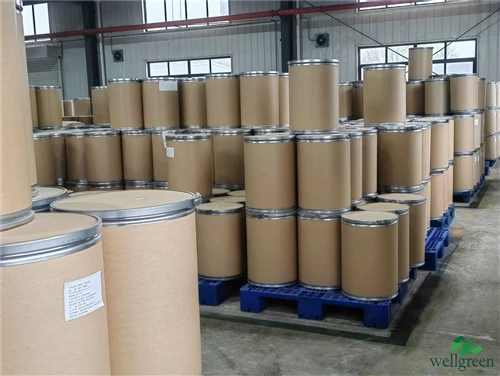
- Segregation in practice. Ask how organic and conventional lots are separated through extraction, drying, blending and packing, and request the records for a recent organic lot. Segregation is a process, and it is where claims most often fail.
- Sample with documents attached. Request the sample together with its COA and the corresponding TC, then verify the three describe the same lot before you plan a trial. MOQ is set according to the individual project, and small initial quantities for testing and sample evaluation are supported.

Wellgreen is an innovation-driven manufacturer of herbal extracts since 2011, certified to cGMP, FSSC22000, ISO22000, ISO9001, HACCP, HALAL, KOSHER and Organic EOS&NOP, supplying the nutritional, food and beverage fields from a 70,000 m² plant with in-house extraction and refining lines. Organic certification applies to the products and processing steps that are inside the certified scope - request the certificate and confirm the scope for the specific grade you intend to buy.
FAQ
Is "organic" the same as "natural" on an ingredient specification?
No. Natural describes where a material comes from; organic describes a certified production and processing system, verified against a defined standard with an auditable paper trail. A natural grade needs no certificate; an organic claim needs one, and the certificate has to cover the specific product, the operator and the processing steps involved.
Which organic certifications actually cover an extract, and what does the scope exclude?
What matters is the operator's certificate scope statement, not the scheme name. It should list the products and the processing steps covered - extraction, carrier addition, milling, packing - and the certifying body. It typically excludes products or steps that sit outside the declared scope, which is why a carrier added outside the scope can take a finished grade out of certification.
Do organic extracts still need the same conventional specification items?
Yes. Organic status sits on top of the technical specification rather than replacing it. Fix the ratio or marker content with its method, the carrier and its organic status, moisture and water activity, contaminant limits including pesticide residues, microbiology and packaging. Confirm each value on the batch certificate of analysis.
What traceability documents should accompany an organic shipment?
The operator certificate with its scope and validity dates, a transaction certificate for the shipped lot, the batch COA and specification sheet describing that same lot, and the segregation or mass-balance records covering extraction, blending and packing. Add the raw-botanical origin details and any GMO, allergen or irradiation statements your market requires. All of them should point to one consignment.
Can a supplier support organic and conventional grades of the same botanical?
Often yes, and that is where segregation controls matter most. Ask how the two streams are kept apart through processing and packing, and request records for a recent organic lot. Running both grades is normal in this category, but the organic claim depends entirely on those controls holding in practice.
Whichever grade you shortlist, the certificate scope and the traceability pack decide whether the organic claim survives an audit - so collect the documents with the order, not after it. If organic ingredients are on your roadmap, a comparable starting point is organic cordyceps.
Request Specifications & Samples
Tell us the botanical, the grade and your destination market, and we will send the specification sheet, the certification documents for the products that hold them, and a sample plan for your own evaluation.
Email: liu@wellgreenxa.com
Tel/WhatsApp: +86-19890982054
Or use the inquiry form below - we usually reply within 24 hours.
Sources
- European Union - Regulation (EU) 2018/848 on organic production and labelling of organic products. https://eur-lex.europa.eu/eli/reg/2018/848/oj/eng
- U.S. Food and Drug Administration - Dietary supplement ingredient resources. https://www.fda.gov/food/dietary-supplements/information-select-dietary-supplement-ingredients-and-other-substances
