




Two buyers ask for a cinnamon extract quotation in the same week. One needs bark powder for a seasoning blend, the other needs a 10:1 cinnamon extract powder for a capsule line. Both are asked the same first question by a customs broker, and the two answers do not match, because the entry that describes a cinnamon extract follows what the goods are, not what the email called them. The same declared fields settle the quotation and the entry at once, and the specification lines have to agree with them.
01 Why the Same Cinnamon Extract Lands in Different Chapters
Is a cinnamon extract classified as a spice, an extract, or a food preparation?
All three descriptions turn up on commercial invoices for goods that look identical in a drum. A tariff does not read the adjective on the invoice; it reads the state of the goods. Dried bark that has been milled is still the spice. Bark that has been extracted, concentrated and dried is a preparation, and a preparation is described by what was done to it.
Where the destination tariff draws that line is settled by the tariff text and by the broker who files the entry, and a concentrated form can sit elsewhere in the schedule. A supplier who gives a firm answer before knowing the destination is guessing.
What changes when the product is a bark powder instead of a liquid extract?
The declared form changes first, and then every document that has to agree with it. A powder carries a mesh figure and a carrier question; a liquid carries a solvent and a solids figure. Those fields are not interchangeable, and a quotation built on the wrong one has to be rebuilt before it can be filed.
Why does the declared form matter more than the botanical name?
Because the botanical name is shared. Cassia bark, cassia bark powder and a cassia extract carry the same species line and can be entered three different ways. The species identifies the material; the form identifies the article.
02 What the Specification Sheet Actually States
Which plant part does the certificate name?
A specification that names the species but not the part is incomplete. Bark, leaf and twig are three materials with different composition and different price levels, and no single line describes all three. Ask for the part in the same sentence as the botanical name.
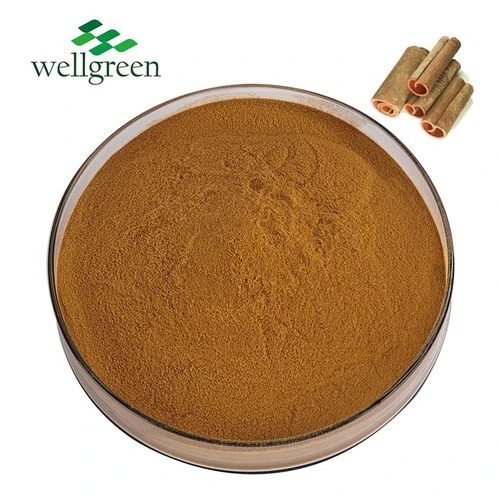
Our cinnamon extract page declares the source as Cinnamomum cassia, the plant part as bark, a 10:1 extract ratio, food grade, a reddish brown fine powder, and TLC alongside HPLC as the test methods. Those six lines are the ones a buyer can check without writing back.
A sheet is only worth the check behind it, and the order of that check is set out in our notes on verifying a plant extract supplier.
03 Bark, Powder or Extract: The Three Forms Buyers Mix Up
Is cinnamon bark sold as a spice the same article as cinnamon bark extract?
No, and the difference is not a marketing one. The spice is the dried bark. The extract is what leaves the bark after a solvent has been applied and the solution has been dried. Two products, two descriptions, and usually two outcomes on an entry.
When does a powder stop being a powder for classification purposes?
When the powder is no longer milled spice. A bark powder is the spice in another physical state. A 10:1 powder holds material that was extracted and re-dried, and the ratio is the only line on the sheet that records that step. Without it, the buyer cannot tell which of the two is in the drum.
| Declared form | What the sheet should state | What it decides on an entry | What to request |
|---|---|---|---|
| Whole or cut bark | Botanical source, plant part, moisture | Whether the goods stay with the spice | Moisture and volatile oil figures |
| Bark powder | Part, fineness, nothing added | Whether the article is still the milled spice | Mesh size and a carrier statement |
| 10:1 extract powder | Ratio, extraction solvent, carrier | Whether the goods move to a preparation line | Solvent used and the carrier share |
| Standardised extract | Named marker and its method | Which description the marker belongs to | Marker name, method and lot figure |
| Liquid extract or oleoresin | Solvent, solids content | Whether the goods leave the spice line | Solvent and solids content |
Read the table down the first column: the species is the same in every row.
04 What "10:1" Does and Does Not Tell You
Does a 10:1 ratio describe potency or only the input-to-output relationship?
It records how much raw bark went in for each unit of extract that came out. It is a process figure. It names no compound, states no content, and does not travel to a different raw material.
Can two 10:1 extracts from different suppliers be compared directly?
Only when both sheets also name the part, the solvent and the marker. Two 10:1 powders made from bark of different ages, or extracted with different solvents, are not the same article even though the ratio matches. The ratio opens the comparison; it does not complete it.
05 Cassia and Ceylon: Species, Not Grade
Is Ceylon cinnamon a higher grade of the same material?
It is a different species, not a better batch of one. Trade usage often presents the two as tiers, which is why a request for "cinnamon extract" can come back answered with either material. The species line is the only reliable separator, and it belongs on the sheet rather than in the covering email.
Checking an identity line against the certificate rather than against the product name is the habit we describe for material identified by its tissue of origin, in our notes on a chondroitin sulfate COA.
Why does the botanical name matter on a customs entry?
Because an entry describes goods, and the botanical name is part of the description a broker checks against the invoice. A gap between invoice and certificate is a delay at best and a reclassification at worst.
06 Coumarin: Why It Belongs on the Specification
Which cinnamon species is the coumarin question actually about?
Cassia bark contains coumarin, and the level differs by species and by plant part. A buyer who asks whether the extract sits under a limit has not asked an answerable question, because the answer depends on which species and which part are in the drum.
Should coumarin be declared as a specification line or a test result?
Either works, as long as the sheet says which. A specification line is a limit the lot must meet; a test result is a measured figure for that lot. A buyer comparing two sheets has to know which of the two is in front of them, and has to have the method, because the figure does not travel without it.
Whether a limit applies at all, and where it sits, is decided by the destination market and by how the product is used; that call belongs to the importer and its regulatory adviser. What a supplier can do is state the measured figure, the method and the lot it belongs to. We set out certificate lines in the same order for every bulk powder, as in these notes on tart cherry powder.
07 Documents a Broker Will Ask For
Which document normally decides the classification outcome?
None decides alone. The entry is built from the invoice description, the packing list, the certificate of analysis and, where the tariff asks for it, a statement of the process. The broker reads them together and files the description that fits the goods.
What happens when the invoice description and the COA disagree?
The entry waits until they agree. A certificate reading bark extract powder at 10:1 against an invoice reading cinnamon powder is not a small inconsistency: it is two different articles.
08 Reading a COA Line by Line
Which lines can two suppliers compare directly?
The lines that name an object and a method. Appearance, plant part, botanical source and mesh compare across suppliers because the units are shared. A marker figure compares only when both sheets name the same marker by the same method.
Which line tells you nothing without the test method?
Every assay line. A marker figure with no method is a number without a ruler, and two suppliers quoting the same marker by different methods are not quoting the same thing. We ran into the same problem with a standardised artichoke leaf extract, where one percentage turned out to describe two different measurements.
09 What to Send Before You Request a Quotation
Which four fields decide both the price and the code?
Declared form, plant part, botanical species, and whether the product is standardised to a named marker. Those four let a supplier quote and let a broker begin. Volume, packing and destination follow, and the destination counts twice: once for the entry, once for the documents that market requires.
Send them in one message. A quotation built on three of the four will be revised, and the revision usually moves the description as well as the figure. Our notes on herbal extract powder sourcing follow the same order.
10 Frequently Asked Questions
What HS code does cinnamon extract fall under?
A code cannot be given from a product name. Classification follows the declared form, the plant part, the degree of processing and the end use, and it is confirmed against the destination tariff by the importer or the broker. Two drums of the same extract can be entered differently if one is standardised and the other is not.
Is cinnamon bark extract the same product as cinnamon powder?
No. Bark powder is the milled spice. An extract is material removed from the bark by a solvent and then dried, usually onto a carrier, and usually declared with an extract ratio. The two are described differently and priced differently.
Does a 10:1 ratio mean 10 times stronger?
It means ten parts of bark were used for one part of extract. Strength is a separate question that only a marker figure and its method can answer, and a ratio on its own supplies neither.
How do I tell cassia from Ceylon on a COA?
By the botanical source line, not by appearance and not by the word cinnamon. Ask for the species name and the plant part in writing; a sheet that gives only the trade name has not answered the question.
What is the difference between TLC and HPLC on a cinnamon extract COA?
TLC separates compounds on a plate and is used for identity and for pattern comparison. HPLC separates them in a column with a detector and is used for a quantitative figure. A sheet listing both says identity was checked and a figure was measured; it does not say the figure is comparable with another supplier's unless the method matches.
Can you supply bulk quantities with OEM packing?
Packing and label options are confirmed per order, together with the specification the lot will be released against. Send the four fields above and the destination, and the quotation will state both.
11 Request a Specification Sheet
If you are qualifying a cinnamon extract, send the four fields and we will return the specification sheet for that material, with the test methods named line by line, plus a sample if you need one.
Email liu@wellgreenxa.com or message us on WhatsApp with your target specification. We reply within 24 hours. If the entry you are filing depends on the declared form, say so in the first message - that decides which documents we send with the sheet.
---