




Buying organic blueberry powder in bulk is a grade decision before it is a price decision. The same fruit reaches the market as juice powder, as freeze-dried powder and as an extract, and the three behave differently in a blend, a bake and a bottle - so two quotations under the same product name can be describing materials that are not interchangeable. This guide is written for the buyers who have to settle that: procurement teams, product developers and quality managers at supplement, beverage, bakery and nutrition brands, contract manufacturers and private-label suppliers. It covers what the material is, how the bulk grades differ, the specification items to fix, how orders are packed and documented, and where each grade fits across applications.
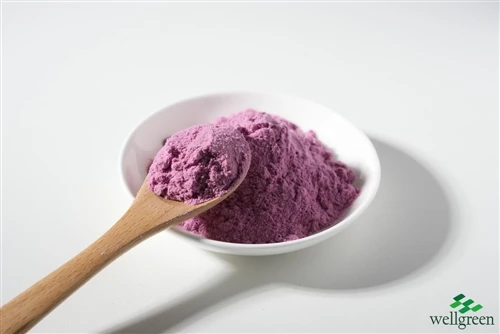
What Blueberry Powder Is - and Which Grades Buyers Specify
The category covers several genuinely different products. Juice powder is produced by concentrating and drying the pressed juice, usually onto a carrier. Freeze-dried powder is made by drying whole or sliced fruit under vacuum and milling it, which keeps more of the whole-fruit matrix. An extract is produced by extracting the fruit and standardising the result to a defined marker. Each route produces a material with its own colour, solubility and handling behaviour, and each therefore needs its own specification.
Three characteristics drive the purchasing decision:
- Colour and solubility. The juice and freeze-dried routes give different colour intensity and different dispersion behaviour, which decides where the material can be used before any number is discussed.
- Carrier and content. A juice powder standardised onto a carrier and a freeze-dried powder with no carrier have different mass balances, so cost per kilogram is not comparable until both are stated.
- Stability in storage. The pigments that give the fruit its colour are sensitive to heat, oxygen and light, so packaging and storage assumptions belong in the specification rather than in the warehouse.
Because the routes differ this much, the first purchasing step is not comparing suppliers but deciding which grade the formulation actually needs.
Bulk Grades Compared: Juice Powder, Freeze-Dried and Extract
The table sets out how the three bulk routes differ for a purchase specification. It is a map of what to fix, not a ranking - the right grade follows from your application and your inclusion rate.
| Grade | Process route | Specification items to fix | Where it fits |
|---|---|---|---|
| Juice powder | Press, concentrate, dry onto a carrier | Carrier identity and proportion, colour description, solubility, moisture, microbiological limits | Beverage and dry-mix formats where dispersion and colour are the priorities |
| Freeze-dried powder | Vacuum-dry whole or sliced fruit, then mill | Particle size distribution, moisture and water activity, colour, microbiological limits, heavy metals | Formats where the whole-fruit matrix and a clean label positioning matter |
| Extract | Extract the fruit, then standardise to a marker | Marker content with its method, extraction solvent residuals, carrier, moisture, contaminant limits | Formats that need a repeatable contribution from a smaller dose |
Where the visual contribution is the point of the ingredient rather than its fruit identity, our background note on fruit and vegetable powders as colorants covers that specification route; the pigment family specific to this fruit is treated in our natural food colorant selection guide. Both are reference reading - the sourcing decision here is about which grade, from which supplier, on which documents.
Specification Checklist: What to Request from a Blueberry Supplier
The items below are what makes two offers comparable. Values belong to your own development and quality teams and should be confirmed on the batch certificate of analysis - the grade a supplier publishes does not by itself tell you what a given lot measured.
- Grade route and carrier, stated explicitly: juice, freeze-dried or extract, and the carrier identity and proportion where one is used.
- Colour description with the basis on which it was assessed, since colour is a functional property of this material and not a cosmetic detail.
- Moisture and water activity, and particle size distribution where the grade is a powder to be blended.
- Solubility and dispersion behaviour in the medium you will use - water, a dry blend or a baked matrix behave differently.
- Contaminant testing - heavy metals, pesticide residues and microbiological limits - set against your destination market and tested per batch.
- Storage conditions and shelf life with the packaging they assume, plus what the supplier expects after the container is opened.
When you assess a blueberry powder supplier, apply the same general discipline as for any botanical ingredient: business scope, certificate scope, certificate-of-analysis reading and sample qualification. Our note on verifying a botanical ingredient supplier sets that process out. The addition specific to this material is colour: a supplier who can describe how colour is measured and how it is protected across lots is answering the question your product development team will ask. Buyers working on a blueberry powder wholesale basis should expect the same evidence; the difference is that volume makes batch consistency the deciding factor rather than the certificate alone.
Bulk Packing, Stability and Documentation
Once the grade and specification are fixed, a blueberry powder bulk order runs on packaging and paperwork. Three items decide whether the material arrives in the condition it left in:
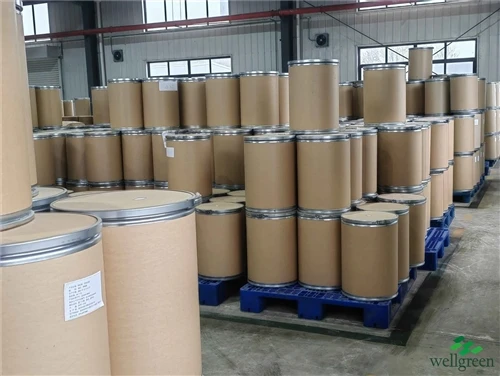
- Moisture- and light-barrier packaging. Ask for the container closure and liner in writing. Protecting the material from light and moisture is what preserves both its flow behaviour and its appearance.
- Storage and shelf life, with the assumptions stated. Temperature, humidity and light protection, plus stability data covering sealed storage and in-use exposure after opening.
- The document pack. Specification sheet, batch certificate of analysis with methods stated, safety data sheet, allergen statements, country of origin and producing site, and any certificate that applies to the products holding it.
Two habits reduce disputes. Check that the lot number on the certificate matches the lot number on the packaging before the container is cleared, and keep a retained sample from each delivered lot so that a later question about colour or flow can be settled against the material itself.
Applications: Beverage, Bakery and Nutrition Formats
The same grade is specified differently depending on where it lands, and the application decides which items move to the front:
- Beverage and dry-mix formats. Dispersion, sediment behaviour and colour stability lead, together with how the material performs across the shelf life of a liquid or a sachet.
- Bakery and confectionery. Heat exposure during processing and pH of the matrix come first, because both act on the pigments that carry the colour.
- Nutrition and supplement formats. Flowability, moisture control and particle size dominate, since the material has to dose accurately and hold its specification through the shelf life.
One caution across all three routes: whether a fruit powder is treated as a food, a supplement ingredient or a colouring is a market-specific determination, so confirm the position for your destination with the competent authority or a regulatory consultant. This article is a sourcing orientation, not legal advice, and the applicable rules should be checked against the latest official notices.
FAQ
What is the difference between blueberry juice powder, freeze-dried powder and blueberry extract?
They are three different process routes rather than grades of one product. Juice powder is concentrated juice dried onto a carrier, freeze-dried powder is vacuum-dried whole fruit that is then milled, and an extract is standardised to a defined marker. Colour, solubility, carrier content and inclusion rate behaviour differ, so each needs its own specification and they are not interchangeable in a formulation.
What specifications should I request for bulk blueberry powder?
The grade route with its carrier identity and proportion, a colour description with the basis on which it was assessed, moisture and water activity, particle size distribution, solubility and dispersion behaviour in your medium, contaminant testing against your market, and the storage conditions and shelf life with the packaging they assume. Confirm each value on the batch certificate rather than from a catalogue page.
Is organic blueberry powder available, and what does the certificate cover?
An organic grade can be offered, and the claim rests on certification rather than on the product name. Ask for the operator certificate with its scope and validity dates and for the lot-level transaction document, then confirm that the specific grade and its processing steps fall inside that scope. Coverage should be confirmed per product and per batch.
How is bulk blueberry powder packed and stored to protect anthocyanins?
Moisture- and light-barrier packaging with a stated container closure and liner, stored at the temperature, humidity and light protection the declared shelf life assumes. Ask for stability data covering both sealed storage and in-use exposure after opening, and keep a retained sample from each lot so a colour or flow question can be answered against the material.
Which applications suit the powder - beverage, bakery or nutrition?
Beverage and dry-mix applications where dispersion and colour stability lead; bakery and confectionery where the matrix pH and the heat of processing are the constraints; and nutrition or supplement formats where flow, particle size and moisture control decide dosing accuracy. The grade should be chosen against the inclusion rate of your formulation rather than against a general product listing.
Whichever grade you shortlist, the route, the carrier and the batch documents decide what actually arrives - so fix them in writing and confirm them per lot. If the project needs a modified format or private-label work, OEM and custom manufacturing covers how that scope is handled.
Request Specifications & Samples
Tell us the grade, the application and your destination market, and we will send the specification sheet, batch documentation and a sample plan for your own evaluation.
Email: liu@wellgreenxa.com
Tel/WhatsApp: +86-19890982054
Or use the inquiry form below - we usually reply within 24 hours.
Sources
- U.S. Food and Drug Administration - Dietary supplement ingredient resources. https://www.fda.gov/food/dietary-supplements/information-select-dietary-supplement-ingredients-and-other-substances
- U.S. Food and Drug Administration - Q1A(R2) Stability Testing of New Drug Substances and Products (ICH guidance; the reference framework most suppliers work to for stability protocols). https://www.fda.gov/regulatory-information/search-fda-guidance-documents/q1ar2-stability-testing-new-drug-substances-and-products
