




A quotation for beta sitosterol rarely fails on the powder itself. It fails on the figure printed beside it. Our own beta sitosterol powder page prints 90% and names GC, the same article is offered in 20%, 40% and 80% tiers, and a phytosterol complex can arrive with no assay line at all. All three can be called beta sitosterol in an email. What follows is what the figure is attached to on the sheet, how gas chromatography produces it, and which four fields decide whether two beta sitosterol quotations describe the same material.
01 Why "90%" Is Not One Product
Is 90% a single product or a family?
It is a value, and a value on a specification is a pair: a number and a method. Our page prints 90% and names GC as the test. Change the method and the number stops travelling with it, because a figure produced one way cannot be read as if it were produced another way. The sheet also rarely says whether the figure is a floor the lot must clear or a typical centre the lots cluster around.
What else changes when the assay changes?
Three things, none of them hidden. The mass of powder needed to carry a given amount of the named sterol changes arithmetically. The way the powder behaves on a filling line changes, because higher-assay material is usually isolated differently. And the tier list shows the supplier runs more than one grade, so the 90% is a standard offer rather than the plant's only output.
02 What the Specification Sheet States
Which lines does the specification sheet actually carry?
Five, and each answers a different question. The specification line gives the assay figure. The test line gives the method. The appearance line gives a physical description a buyer can check against a sample. The grade line places the material in a commercial category. The CAS entry gives a registry identifier that belongs to a substance, not to a drum. Only the first two are a measurement.
The order in which to read those lines against a certificate is the same one we use for any powder, set out in our notes on a chondroitin sulfate COA.
What does customized 20%, 40%, 80% mean on a page that headlines 90%?
It means the headline figure is the standard offer and the rest are made to order. The question that decides the document is whether a custom tier is isolated to that assay or blended down from higher-assay material. An isolated tier carries its own certificate line. A blended tier carries the arithmetic of the blend, and the buyer is entitled to see what went into it.
03 Assay Tiers: 20%, 40%, 80% and 90%
Do the four tiers differ only in assay?
No. As the assay falls, more material travels in the drum for the same sterol mass, so packing, freight volume and kilograms per batch move with it. A lower-assay material also carries more of the matrix it was separated from, and behaves differently.
| Declared tier | What the sheet states | What changes across tiers | What to confirm before booking |
|---|---|---|---|
| 20% | A lower assay figure, same test method | More powder carries the same sterol mass | Whether the figure is a floor or a typical value |
| 40% | Mid-tier assay, same test method | Packing and freight volume move up with mass | Which lot the certificate belongs to |
| 80% | Near-top tier, same test method | Less mass per unit of sterol, denser handling | Whether the tier is isolated or blended |
| 90% | The page's standard offer | The highest assay the standard line prints | Whether this is the grade actually in stock |
| Custom | Listed as made to order | The tier may be a blend rather than an isolate | What the tier was blended from |
Read the first and last columns together: the tier tells you what is in the drum, the fourth column tells you what is still unstated.
Is a higher tier always the right purchase?
Only when your process is limited by mass. A fixed capsule volume can hold only so much powder, so a low tier may not fit the mass you need to carry. A blend or a tablet granulation usually has room, and there the difference between tiers is freight and handling rather than fit. That is a formulation question, settled before the quotation rather than after.
04 GC as the Test Method: What It Measures and What It Does Not
What does GC measure on a sterol powder?
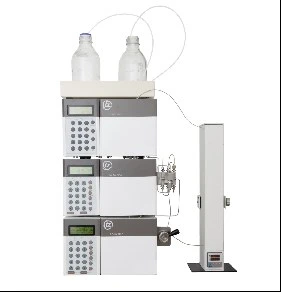
It separates the components of a prepared sample in a column and reports them as area percentages against a calibration run under the same conditions. The figure that reaches your certificate is therefore an outcome of the method: the column, the temperature programme, the preparation step and the standard. Change any of those and the same powder can return a different number without anything in the drum changing.
What does GC not tell you?
It does not report particle size, bulk behaviour, moisture or microbiological status, and it does not tell you whether the figure reflects one sterol or several unless the method resolves the others. It is one measurement of one property, and a certificate built only on it is a certificate about composition, not about handling.
That distinction matters most when you are qualifying a supplier rather than a lot, which is the exercise described in our notes on verifying a plant extract supplier.
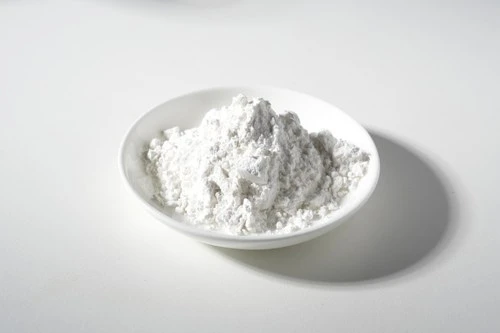
05 Crystalline Powder or Free-Flowing Powder
Why does the page describe the powder as crystalline?
Because the isolation route produces crystals, and crystals are dense. Dense powder flows unevenly, bridges in a hopper and can dust when it is poured. None of that is a defect; it is a property that has to be matched to the line it will run on.
When would a free-flowing powder be requested instead?
When the filling line is the constraint. If the powder must move through a narrow feeder, blend evenly at a low inclusion, or avoid dusting in an open booth, flow becomes a purchasing criterion alongside assay. Ask whether the free-flowing version is milled from the same lot or made to a separate specification; the two answers imply different certificates.
06 Beta-Sitosterol, Plant Sterols and the Naming Problem
Are beta sitosterol and phytosterol the same thing?
Not as documents. Beta sitosterol names one sterol; phytosterol names the family, and a phytosterol complex is a mixture of several. An assay figure under one heading is not the same measurement as an assay figure under the other, even when both sheets look alike at a glance. The two names are used interchangeably in enquiries, which is where the confusion does its damage.
Why does the naming matter in a purchase order?
Because the assay line is attached to the name. If your specification says phytosterol and the shipment is beta sitosterol, both may be usable materials and neither is what the document says. The same trap shows up whenever one percentage is asked to describe two different measurements, as in our notes on a standardised artichoke leaf extract.
07 Comparing Two Quotations Field by Field
Which fields decide whether two quotations are comparable?
Six: the name on the sheet, the assay figure with its method, whether that figure is a floor, the appearance and flow, the packing, and the documents due with each lot. Two quotations that agree on the figure and disagree on any of the other five are not two quotations for the same material.
What if one supplier quotes a tier and the other quotes an assay?
Put both on the same basis before comparing anything. Ask each for the figure as a number, the method that produced it, and a statement of whether the lot is released against that figure as a minimum. A tier label without a basis is a name, not a specification.
08 Documents to Request Before You Book
Which documents should arrive before a booking?
Four. The specification sheet, so you know what the article claims to be. The certificate for the lot actually offered, so you know what that lot measured. A packing statement, so the unit and the liner are fixed before the order. And, for a custom tier, a statement of what it was blended from. A quotation alone answers none of those questions, as our notes on another bulk powder set out.
09 What to Put in Your Own Purchase Specification
Which lines belong in your own purchase specification?
Five, written before you request anything: the name with its family, the assay as a minimum with the method named, the appearance and the flow behaviour you can accept, the packing unit, and the documents due per lot. Each one removes a question that would otherwise arrive after the order.
How should the assay line be worded?
As a floor, not a target, and with the method attached: beta sitosterol, not less than the stated figure by GC, figure reported per lot, method named on the certificate. A specification that prints the figure alone leaves the supplier free to read it as a typical value, and that reading is the one that produces an argument at goods-in. Our notes on herbal extract powder sourcing follow the same order.
10 Frequently Asked Questions
Is a 90% assay the same as 90% purity?
Not as a rule. Purity is a statement about what else is present; an assay figure is a statement about how much of the named substance the method found. A certificate can carry a high assay and still list other sterols, moisture or residual material on separate lines.
Can the 20%, 40% and 80% tiers carry the same certificate format?
They can, and they should. The lines stay the same and only the figure and the basis change. If a lower tier arrives with fewer lines than the standard grade, that is worth a question before booking.
Does a GC result tell me the particle size?
No. Particle size and flow are physical properties measured another way, usually by sieve or by a flow test. A certificate built only on chromatography says nothing about how the powder will run on your line.
Why is the powder described as crystalline?
Because the isolation step produces crystals rather than a milled powder. Crystalline material is dense and can flow poorly, which is a handling fact rather than a quality judgement.
Is beta sitosterol the same as phytosterol?
Beta sitosterol is one sterol; phytosterol is the family, and a complex contains several. Ask which name the assay line belongs to before comparing two figures.
Do you supply bulk quantities with OEM packing?
Packing and labelling are confirmed per order, together with the tier and the documents the lot will be released against. Send the five lines from section nine and the destination, and the quotation will state both.
11 Request a Specification Sheet
If you are qualifying beta sitosterol, tell us the tier you are working to, whether the assay must be a floor, and how the powder will be filled. We will send the specification sheet for that grade with the method named, the certificate for the lot we would ship, and a sample drawn from the same lot.
Email liu@wellgreenxa.com or message us on WhatsApp. We reply within 24 hours. If you already hold a certificate from another supplier, send it with your target tier - it is faster to name the two lines that do not match than to rebuild the specification from the start.
---