




Feed is the single largest cost line in poultry production - and ammonia quietly erodes the return on it. For feed producers and integrators sourcing yucca extract powder for poultry feed, the practical question is not whether plant-based ammonia control works, but how to specify, dose and verify it. This guide covers what yucca extract for poultry is used for, the specifications that decide results, published dosage ranges, application scenarios, and a selection checklist you can take straight to a supplier.
Why Ammonia Control Is a Margin Issue, Not Just a Hygiene Issue
For anyone specifying yucca extract for poultry, ammonia (NH₃) is the hidden cost driver: it rises from litter as uric acid and urea are broken down by microbes. At elevated levels, birds cut feed intake, respiratory tissue is irritated, and more of the energy you paid for goes into maintenance instead of growth. Published poultry research links high aerial ammonia to reduced growth rate and feed intake through damage to the respiratory tract, and to greater susceptibility to respiratory challenges [2].
The Cost Chain Behind FCR and Respiratory Pressure
Follow the chain: higher NH₃ → lower feed intake → worse feed conversion → longer cycle time → higher cost per kilogram of live weight. Add ventilation energy used to exhaust the gas and the labour spent managing litter, and ammonia becomes a line item rather than a housekeeping detail. That is why feed mills treat yucca extract for poultry as a margin tool: a small dietary inclusion aimed at reducing nitrogen losses at the source, rather than only treating the air in the house.
How Yucca Saponins Work in Feed - in One Page
Yucca schidigera extract carries steroidal saponins plus a glycol fraction. In brief: saponins are surface-active molecules that interfere with urease-producing bacteria, while polysaccharides in the extract bind ammonia and other nitrogenous compounds, shifting nitrogen into less volatile forms. The result, when the extract is included in feed or drinking water, is less ammonia released from excreta. The chemistry is covered in detail in our separate guide on how yucca saponins reduce ammonia - below we stay on the purchasing side.
What "B50" Tells You About Ammonia Binding
Ammonia binding is the effect you are buying, so the specification should quantify it. Suppliers express this as a B50 value: the amount of product needed to bring free ammonia concentration down to half its original level. The lower the B50, the stronger the binding capacity - and unlike a marketing claim, it can be measured batch by batch. Ask for third-party B50 reports for the lots you are offered.
Specifications That Decide Your Purchase
Two extracts can both read "≥30% saponins" and still behave differently in your premix. Particle size, solubility, pH and microbiology are the parameters that decide whether the powder mixes cleanly, flows through a water line, and stays stable in storage.
Saponin Content (UV Method), Particle Size, Solubility and pH
When you buy yucca extract for poultry in bulk, saponin content is determined by UV spectrophotometry and stated as a minimum. Sieve analysis (for example, 98% through 80 mesh) governs blending behaviour; water solubility and pH matter most for drinking-water applications and liquid premixes.
| Parameter | Typical specification |
|---|---|
| Saponin content (UV method) | ≥ 30% (example batch: 32.57%) |
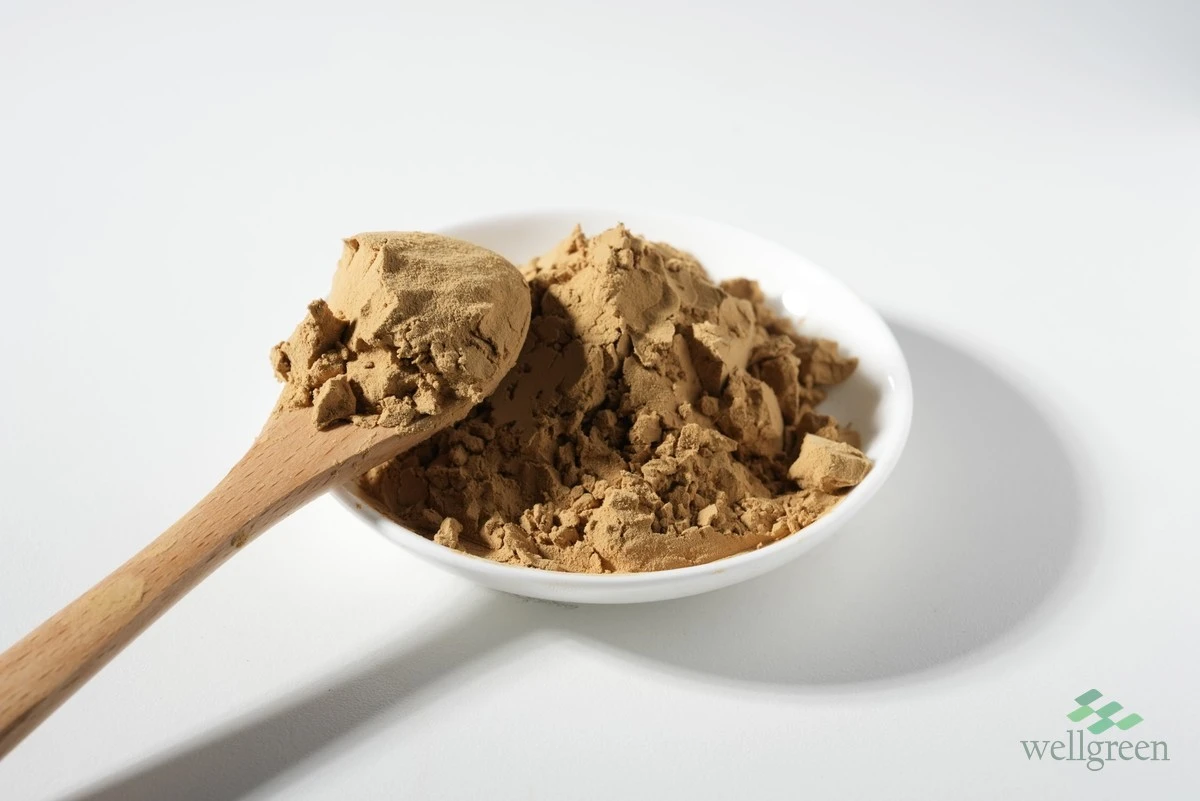
| Appearance | Light yellow, fine powder |
| Particle size | 98% through 80 mesh |
| pH (20% w/w solution) | 4.1 ± 0.2 |
| Water solubility | ≥ 99% (1 g in 100 mL water) |
| Loss on drying | ≤ 5.0% |
| Total plate count | ≤ 1,000 cfu/g |
| Yeast & mould | ≤ 100 cfu/g |
| E. coli / Salmonella / Staphylococcus | Not detected |
| Packaging | 1 kg foil bag; 25 kg drum |
| Shelf life | 24 months, cool and dry place |
| Custom options | 10–98% powder grades; 5–60% liquid |
Choosing Between 30% and 50% Saponin Content
A 30% standardized powder is the common feed-mill choice because it balances cost per unit of active saponin with a workable inclusion rate. Higher-standardization grades (50% and above) concentrate the actives per kilogram, which reduces inclusion weight but raises unit cost - and can complicate dilution in small premixes. Decide on cost per unit of saponin delivered, not on the percentage printed on the bag. Our comparison of 30% vs 50% saponin content compared walks through the trade-offs.
Dosage Reference: What Published Studies Report
The table summarizes inclusion levels examined in peer-reviewed poultry and swine studies. These are common research ranges, not a company recommendation or guarantee. Actual inclusion depends on species, production stage, diet composition, housing and management practice - always validate on your own farm or in your own trial.
| Species / route | Studied inclusion range | What the study reported | Source |
|---|---|---|---|
| Broilers / drinking water | 0.5 and 1 mL/L, 8 h per day | Lower litter nitrogen; reduced total bacteria and E. coli counts; improved feed conversion ratio | Ayoub et al., Animals 2019 [2] |
| Laying hens / diet | 100 ppm reported effective (50 and 200 ppm did not reduce NH₃ emission in the same trial) | Lower ammonia emission when combined with frequent manure removal | Chepete et al., J. Appl. Poult. Res. 2012 [1] |
| Finishing pigs / diet | 100–300 mg/kg feed | Reduced caecal ammonia-N; selective inhibition of urease-producing bacteria | Rossi & Alvarez-Rodriguez, Animals 2026 [3] |
Converting a research dose into a purchase specification also means converting between saponin-standardized grades and raw powder bases - the calculation trap is covered in our note on commonly cited dosage ranges.
Application Scenarios: Broiler, Layer and Swine
Broilers
Two routes are used: in feed (through the premix, so every pellet carries the same dose) or in drinking water (typically during defined hours per day). The drinking-water study above used liquid supplementation for 8 hours daily [2]. If you go the water route, confirm solubility and compatibility with other water-line additives before committing.
Layers
Layer results are dose- and management-dependent. In one trial, 50 and 200 ppm in the diet did not reduce ammonia emission, while 100 ppm paired with frequent manure removal did [1]. The practical takeaway: treat dietary inclusion as one lever, not the whole system. Litter removal frequency and ventilation remain part of the specification.
Swine
In pigs, controlled work has examined 100–300 mg/kg feed, reporting reduced hindgut ammonia-N and selective inhibition of urease-producing bacteria without disrupting overall fermentation [3]. Where enzyme complexes are in the diet, validate the combination: published work combining enzymes with a high yucca inclusion rate reported lower nutrient digestibility, so pairing and level should be confirmed on your diet rather than assumed.
Common pitfalls: treating yucca as a substitute for ventilation and litter management; comparing suppliers on saponin percentage alone without B50, solubility or microbiology data; and changing inclusion rates without re-measuring litter nitrogen and FCR after two to three weeks.
Selection Checklist for Feed Producers
Seven items decide whether a yucca supplier is a workable long-term partner:
- Saponin content and test method - stated minimum with UV method, plus actual batch values.
- Microbiology and heavy metals - which contaminants are tested on every lot, and to which limits.
- Impurity and mould - visible impurity and mould checks, plus moisture and ash data.
- Batch documentation - CoA, TDS, MSDS and, critically, a B50 report per lot.
- Feed additive qualifications - a valid feed additive production licence, plus ISO 9001, ISO 22000, HACCP and cGMP where applicable.
- Packaging and lead time - foil bag or drum formats, palletization, and realistic repeat-order lead times.
- Supplier audit - factory capability, retained samples, and lot-level traceability from raw material to finished drum.
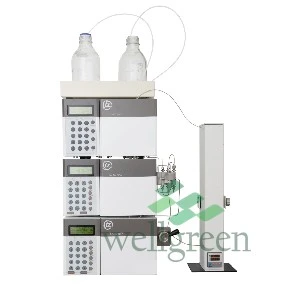
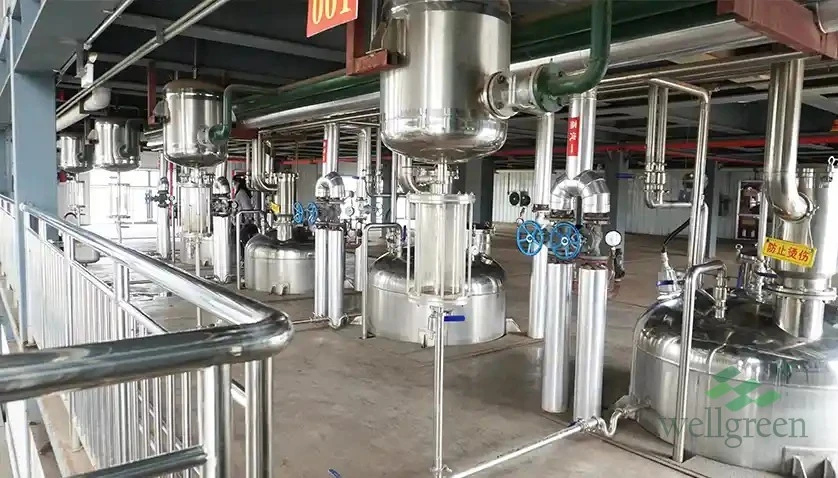
Wellgreen Technology has produced botanical extracts since 2011, with 120+ employees, a 73,000 m² facility, an annual capacity of 3,000 MT, seven production lines and seven extraction vessels; packaging is completed in a Class 100,000 cleanroom, and quality control runs on two HPLC units alongside LC-MS, GC and UV-Vis instruments. Holding a feed additive production licence plus ISO 9001:2015, ISO 22000, HACCP, cGMP, Kosher and Halal certification, the company tests yucca saponins by UV and checks impurity, mould, moisture (GB 5009.3) and ash (GB 5009.4) as routine raw-material items.
Frequently Asked Questions
How much yucca extract is typically added to poultry feed?
Published broiler and layer studies commonly examine inclusion levels in the range of tens to low hundreds of ppm - for example, 100 ppm in layer diets - while drinking-water studies report 0.5–1 mL/L of liquid product. These are research ranges, not a fixed recommendation; confirm your rate with a farm trial.
Does yucca extract work for both poultry and swine?
The ammonia-binding and urease-inhibition mechanisms apply across species, and controlled studies exist for broilers, layers and pigs. Inclusion levels and responses differ, so treat poultry and swine specifications as separate applications.
30% vs 50% saponin yucca extract - which suits a feed mill?
30% is usually the practical standard for feed inclusion; 50% and higher grades suit concentrated premixes. Choose on cost per unit of saponin delivered rather than percentage alone.
Is yucca extract a workable alternative to chemical ammonia control in poultry houses?
It addresses the same problem through a different route - reducing nitrogen losses at the source rather than only treating air in the house. Most producers use it alongside ventilation and litter management; the layer trial above shows why that pairing matters [1].
What specifications and documents should I request on a bulk inquiry?
Request a specification sheet with the UV saponin method, particle size, solubility and pH; a batch CoA covering microbiology and heavy metals; a B50 report; TDS, MSDS and allergen statement; your supplier's feed additive production licence; and packaging options with lead time.
References
- Chepete, H.J., et al. (2012). Ammonia emission and performance of laying hens as affected by different dosages of Yucca schidigera in the diet. Journal of Applied Poultry Research, 21(4). https://hal.science/hal-01604458v1
- Ayoub, M.M., Ahmed, H.A., Sadek, K.M., Alagawany, M., Abd El-Hack, M.E., Othman, S.I., Allam, A.A., Abdel-Latif, M.A. (2019). Effects of Liquid Yucca Supplementation on Nitrogen Excretion, Intestinal Bacteria, Biochemical and Performance Parameters in Broilers. Animals, 9(12), 1097. https://doi.org/10.3390/ani9121097
- Rossi, L., & Alvarez-Rodriguez, J. (2026). Effects of Yucca schidigera Supplementation on In Vitro Cecal Fermentation and In Vivo Nutrient Digestibility in Male and Female Lean Fattening Pigs. Animals, 16(9), 1354. https://www.mdpi.com/2076-2615/16/9/1354
- Nutritional approaches to reduce ammonia and odorous compounds from pig manure. Journal of Animal and Feed Sciences. https://www.jafs.com.pl/...
Request Specifications & Samples
Comparing bulk yucca extract for feed mills usually comes down to documentation and consistency. Tell us your species, region and formulation goal for yucca extract for poultry - we will come back with the specification sheet, a sample plan and commercial terms matched to your case.
Email: liu@wellgreenxa.com
Tel / WhatsApp: +86-19890982054
Long-term supply partnerships welcome; trial orders and sample evaluation supported. Typical reply within 24 hours.
