




Purchasing natural feed additives for poultry has become a category decision rather than a single-ingredient transaction. Rations now combine plant-derived actives, organic acids, toxin binders, prebiotic and yeast fractions, enzymes and pigments - each with its own specification logic and supplier base. This guide is written for feed producers, integrators and premix manufacturers who must write a purchase specification, compare quotations that do not compare like for like, and defend the inclusion to a nutritionist and a regulator. It covers why the category is being re-specified, how the main classes differ commercially, the specifications that decide value, the documents to request, and how to evaluate a supplier. If you are mapping the category against what is actually available, start with our animal nutrition ingredient range.
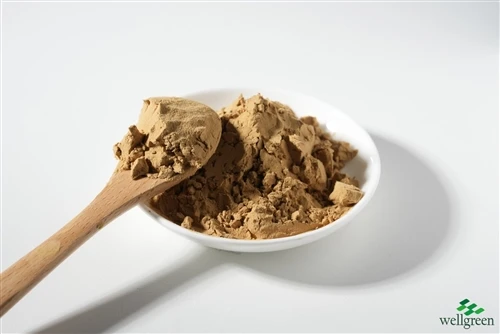
Why Feed Producers Are Rethinking Natural Feed Additives for Poultry
Three pressures have moved this category from a niche add-on to a ration specification line item.
The cost of nitrogen. Feed is the largest cost line in poultry production, and how much nitrogen is retained rather than excreted shapes both feed conversion and the litter environment. Ingredients that influence nitrogen handling at source - plant saponins among them - are evaluated as margin tools rather than housekeeping extras.
Formulation precision. Premix manufacturers increasingly buy actives, not commodities: a standardized extract with a stated content and a defined method is easier to place in a formulation, and to defend in a label, than an unstandardized powder.
Documentation expectations. Retailers and integrators downstream now ask for batch-level documentation as a condition of supply, which shifts selection criteria away from price per kilogram and toward the ability to produce a consistent batch, a test method and a traceable trail.
Note the frame. These are commercial and technical drivers, not therapeutic claims, and nothing here substitutes for veterinary or regulatory advice. When buyers describe the category as natural feed additives used in the poultry industry, the shared characteristic is origin and function in the ration.
The Main Classes of Natural Feed Additives
The word "natural" covers several commercially distinct classes, bought from different supplier bases and tested differently - so treating them as one category is the first sourcing mistake. The table below maps them by function, by the specification items that matter, and by where buyers get caught.
| Additive class | Function in the ration | Specification items to request | Where buyers get caught |
|---|---|---|---|
| Phytogenic / saponin-rich plant extracts | Surface-active saponins and polyphenols used in gut-environment and litter programmes | Active content with its test method, particle size, solubility, pH, microbiological limits | Comparing standardized extracts on percentage alone, without method or carrier |
| Organic acids and their salts | Acidification of feed and water lines; mould control in stored feed | Acid identity and assay, salt form, buffering profile, moisture, equipment-compatibility notes | Assuming different acid salts are interchangeable in handling and dosing |
| Mycotoxin binders and adsorbents | Binding capacity against specified mycotoxins in variable-quality grain | Binding data per toxin, matrix and pH conditions, particle size, dioxin and heavy-metal limits | Accepting a generic binding statement with no toxin-specific data |
| Prebiotics and yeast-derived fractions | Substrate and cell-wall fractions used in gut-health programmes | Source organism, β-glucan or MOS content and method, viability where relevant, microbiology | Confusing live yeast with yeast cell-wall products - different specs and storage needs |
| Enzymes | Improving nutrient availability from the basal diet | Activity units and their definition, thermostability, pH profile, granulation form, carrier | Comparing activity across suppliers whose unit definitions differ |
| Carotenoid pigments | Yolk and skin pigmentation where the market requires it | Active content, stabilization form, oxidative stability, particle size | Underestimating stability loss in premix and during storage |
Within the plant-derived group, saponin-rich materials are the most common entry point. Two sources cover most requirements: yucca extract powder bulk grades, standardized on saponin content, and quillaja extract powder, whose saponin profile and solubility suit different formulation routes. They are not interchangeable - compare them on active content, method, solubility and cost per unit of active delivered.
Where grain quality is variable, a toxin binder for poultry programme is usually specified and tested separately - which is why toxin-specific binding data matters more than a broad claim. The same logic extends to organic feed additives for livestock: within each class, the usable question is whether the supplier can state the active, the method and the batch value.
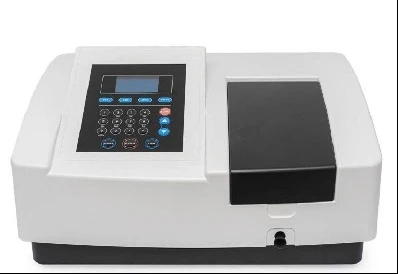
Specifications That Decide Value
Across every class, six parameter families separate a workable ingredient from a quotation that will not survive its first scale-up. The values belong to your nutritionist and regulatory team - treat the list below as questions to ask, not a specification to copy.
- Active content and method. Ask for the value, the analytical method and a representative chromatogram or spectrum. A percentage without a method is not comparable across suppliers.
- Carrier and standardization basis. What the active is standardized on, and what the remainder is. Carrier choice affects flow, dilution and label declaration.
- Particle size distribution. Determined by sieve or laser analysis; it governs blending uniformity, dusting and segregation in the finished premix.
- Solubility and pH. Decisive if the route is drinking water or a liquid premix, and a common source of incompatibility in water lines.
- Moisture, water activity and flow. The parameters behind caking, bridging and shelf-life drift in humid climates.
- Contaminant limits. Heavy metals, mycotoxins, dioxins and microbiology, assessed against your destination market's framework. Limits belong in the specification, not in a supplier's assurance.
Two rules follow. Compare cost per unit of active delivered rather than cost per kilogram - a cheaper quotation with lower or unstated content is frequently the more expensive ingredient. And treat "natural" as an origin descriptor rather than a specification: on its own it carries no analytical value.
Documents and Verification Before You Buy
The document pack is where a purchase of natural feed additives for poultry becomes auditable - or does not. For feed-grade materials, request:
- Specification sheet for the exact grade quoted
- Batch-specific Certificate of Analysis with methods stated
- Safety Data Sheet, plus carrier and allergen statements
- Stability data covering the conditions and packaging the shelf life assumes
- Heavy-metal, mycotoxin and microbiological results against your market's limits
- Feed additive registration or manufacturing licence details for the producing site
- GMO, non-GMO and BSE/TSE statements where relevant
- Country of origin, producing site and packaging
Regulatory status is market-specific and cannot be transferred between destinations. In the European Union, for example, additives for use in animal nutrition are placed on the market under Regulation (EC) No 1831/2003, which establishes a Community authorisation procedure. Other markets operate their own registration or notification routes. Confirm the position for your destination with the competent authority or a regulatory consultant: this is a sourcing orientation, not legal advice, and the rules should be checked against the latest official notices.
How to Evaluate a Natural Feed Additives Supplier
Supplier evaluation for natural feed additives for poultry is closer to a plant audit than to a price comparison, because consistency is a process outcome. Six areas decide whether a supplier can hold a specification across repeat orders.
- Process and standardization control. Ask how the active is standardized and how each batch is adjusted to hit the declared value. Blending to specification differs from extraction consistency, and the difference shows up as batch variance.
- Feed-grade lines and cross-contamination control. Confirm the site runs dedicated feed-grade lines, or document cleaning and changeover controls between product families. This matters most for premix-ready powders.
- Certification and auditability. Certificates should be verifiable rather than decorative: ask for the certificate, its scope and the issuing body. Facility-level marks such as ISO 9001:2015, ISO 22000, HACCP and cGMP-backed manufacturing, plus Kosher and Halal certification where applicable, describe the system; product-level claims must be documented individually.
- Batch consistency data. Request a retained-sample record or a multi-batch trend rather than one good certificate. Variance predicts your next six months.
- Scale-up and capacity. Ask for data showing the specification holds between pilot and commercial volumes, and for realistic lead times.
- Sample and trial plan. Before a commercial commitment, run a pilot quantity through your premix, measure blending uniformity, moisture and flow, and confirm the grade behaves on your line. MOQ is set per project, and small initial quantities for testing and sample evaluation are supported.
When comparing poultry feed additives manufacturers, weight process control and batch data above catalogue breadth; a supplier with fewer SKUs and tighter batch records is usually the lower-risk partner. One division of labour helps: keep single-ingredient mechanism and dosing questions with the technical literature, and category, specification and documentation questions in procurement. Our note on yucca extract for poultry and ammonia control illustrates the first kind - one ingredient, one problem - while this article stays on the category and the purchase.
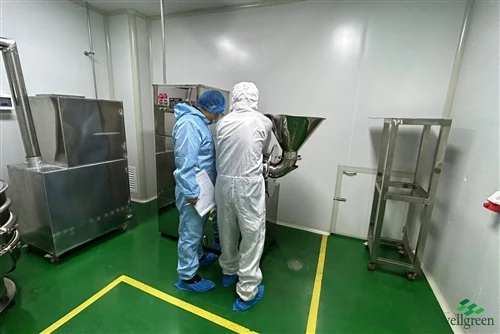
Wellgreen Technology has produced botanical extracts for animal nutrition since 2011 and runs feed-grade production under a feed additive production licence, with batch quality control on HPLC, LC-MS, GC and UV-Vis instruments. Facilities are cGMP- and ISO-certified, holding ISO 9001:2015, ISO 22000 and HACCP, plus Kosher and Halal certification where applicable.
FAQ
What are the main types of natural feed additives for poultry?
Six classes cover most specifications: phytogenic or saponin-rich plant extracts, organic acids and their salts, mycotoxin binders and adsorbents, prebiotics and yeast-derived fractions, enzymes, and carotenoid pigments. They come from different supplier bases and are tested differently, so they are specified as separate line items.
What specifications should I put in a purchase contract for natural feed additives?
Set active content with its analytical method, carrier and standardization basis, particle size distribution, solubility and pH where relevant, moisture and water activity, and contaminant limits against your destination market. Fix values with your nutritionist and regulatory team rather than copying a supplier's brochure.
Which documents should a feed producer request before buying?
A specification sheet for the exact grade, a batch-specific CoA with methods stated, the Safety Data Sheet with carrier and allergen statements, stability data covering the packaging the shelf life assumes, contaminant results, feed additive registration or manufacturing licence details for the producing site, GMO and BSE/TSE statements, and confirmed origin and packaging.
How do natural feed additives differ from phytogenic feed additives as a sourcing category?
Phytogenic additives are the plant-derived subset - extracts and essential-oil-based materials. "Natural" is the wider commercial category, including organic acids, binders, prebiotic and yeast fractions, enzymes and pigments. For sourcing, that means one class-level strategy with separate specifications, tests and supplier bases per line item.
How do I compare suppliers of poultry feed additives in bulk?
Compare process control and batch data first: how the active is standardized, whether feed-grade lines are dedicated, which certificates are verifiable, and how much batch-to-batch variance the supplier demonstrates. Then compare cost per unit of active delivered, and validate a pilot quantity on your line before agreeing a commercial volume.
Whichever classes you shortlist, the specification and the documentation decide the outcome long before the price does. If you are building a category specification, browse our natural feed additives range before you brief your suppliers.
Request Specifications & Samples
Tell us your species, region and formulation goal, and we will come back with the specification sheet, batch CoA and a sample plan matched to your case.
Email: liu@wellgreenxa.com
Tel/WhatsApp: +86-19890982054
Or use the inquiry form below - we usually reply within 24 hours.
Sources
- European Union - Regulation (EC) No 1831/2003 on additives for use in animal nutrition. https://eur-lex.europa.eu/eli/reg/2003/1831/oj/eng
- Ayoub M.M., et al. (2019). Effects of liquid yucca supplementation on nitrogen excretion, intestinal bacteria, biochemical and performance parameters in broilers. Animals, 9(12), 1097 (third-party broiler drinking-water trial). https://www.mdpi.com/2076-2615/9/12/1097
