



NAD+ vs NMN is one of the most common questions we field from procurement and formulation teams in the longevity category. Both names appear on the same finished-product labels, yet they behave very differently on a specification sheet, in a capsule filling room, or in a customs declaration. This guide is written for B2B buyers: the people who select a raw material, defend the specification to a QA reviewer, and then have to source it again next quarter. It compares the two as trade ingredients, explains where NMNH fits, sets out the documentation worth demanding, and summarizes the regulatory picture in the US, the EU and Japan. If you are sourcing beta-nicotinamide mononucleotide (NMN) or NAD+ at commercial scale, the differences below decide cost, lead time and label compliance.
NAD+ vs NMN in Plain Terms: NAD+ Decline and Precursor Logic
Declining NAD+ availability is a normal feature of ageing metabolism, and it is why this ingredient category exists. In formulation terms the distinction is simple: NAD+ (nicotinamide adenine dinucleotide) is the coenzyme cells actually consume - the finished currency. NMN (nicotinamide mononucleotide) is a direct precursor, one enzymatic step upstream of NAD+ in the salvage pathway.
For a buyer, the biologically interesting question is not the commercial one. On the sourcing side, what matters is that orally delivered NAD+ is exposed to extracellular degradation by enzymes such as CD38, ENPP1 and CD73 before efficient absorption. That is why bulk NAD+ is normally purchased for specialized delivery systems, while NMN is the practical precursor for conventional oral formats. This is a formulation constraint, not a health claim; the human-data discussion belongs with the clinical literature, not the purchase order.
We deliberately keep the molecule-level biology and the published human evidence in a separate explainer - see our earlier comparison of NAD+ vs NMN benefits compared. This article stays on the sourcing side.
NMN vs NAD+ vs NMNH - What's Actually Different?
NMNH (reduced NMN, dihydronicotinamide mononucleotide) has entered ingredient catalogs as the newest NAD+ precursor on offer, and NMN vs NMNH is now a recurring question in formulation briefs. Three differences matter at the purchasing desk.
- Commercial maturity. NMN has the deepest supplier base and the most comparable grade structure, which makes benchmarking straightforward. NMNH is offered by far fewer manufacturers, and published regulatory precedent is thinner. Treat it as a qualification project, not a drop-in substitution.
- Form and documentation. The counter-ion and salt form change molecular weight, assay mathematics and label declaration. Ask for the exact form in writing rather than inferring it from a trade name.
- Stability data. For a newer molecule, the burden of proof sits with the buyer: request identity confirmation, the assay method and real stability data before designing around it.
| Ingredient | Role in the NAD+ pathway | Trade forms to ask about | Stability & handling notes |
|---|---|---|---|
| β-NMN | Direct precursor, one enzymatic step upstream of NAD+ | Crystalline powder in high-purity grades; liposomal pre-dispersions | Hygroscopic and moisture-sensitive; confirm moisture spec, packaging and shelf-life data |
| NAD+ | The active coenzyme itself | Free acid or sodium salt; liposomal dispersions | Also hygroscopic; confirm the counter-ion, as it affects assay calculation and label declaration |
| NMNH (reduced NMN) | Reduced nicotinamide dinucleotide analogue; emerging precursor positioning | Limited commercial grades | Newer to market; verify identity, assay method and stability before qualifying |
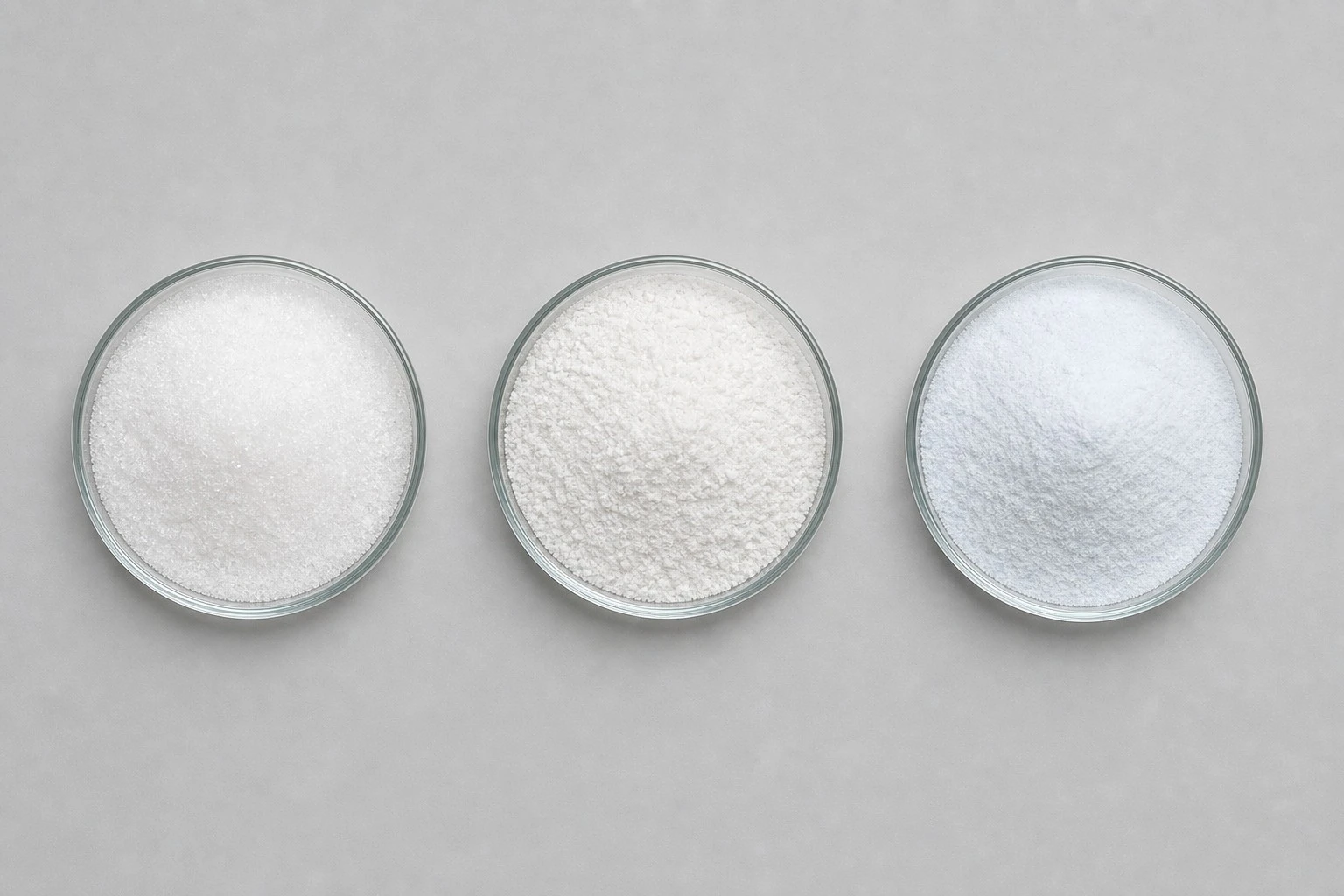
The forms above reflect market presentations, not a specification commitment by any supplier. Confirm form, assay, counter-ion and shelf life on the specification sheet and certificate of analysis (COA) for the grade you intend to buy.
Stability, Purity and the Delivery Question
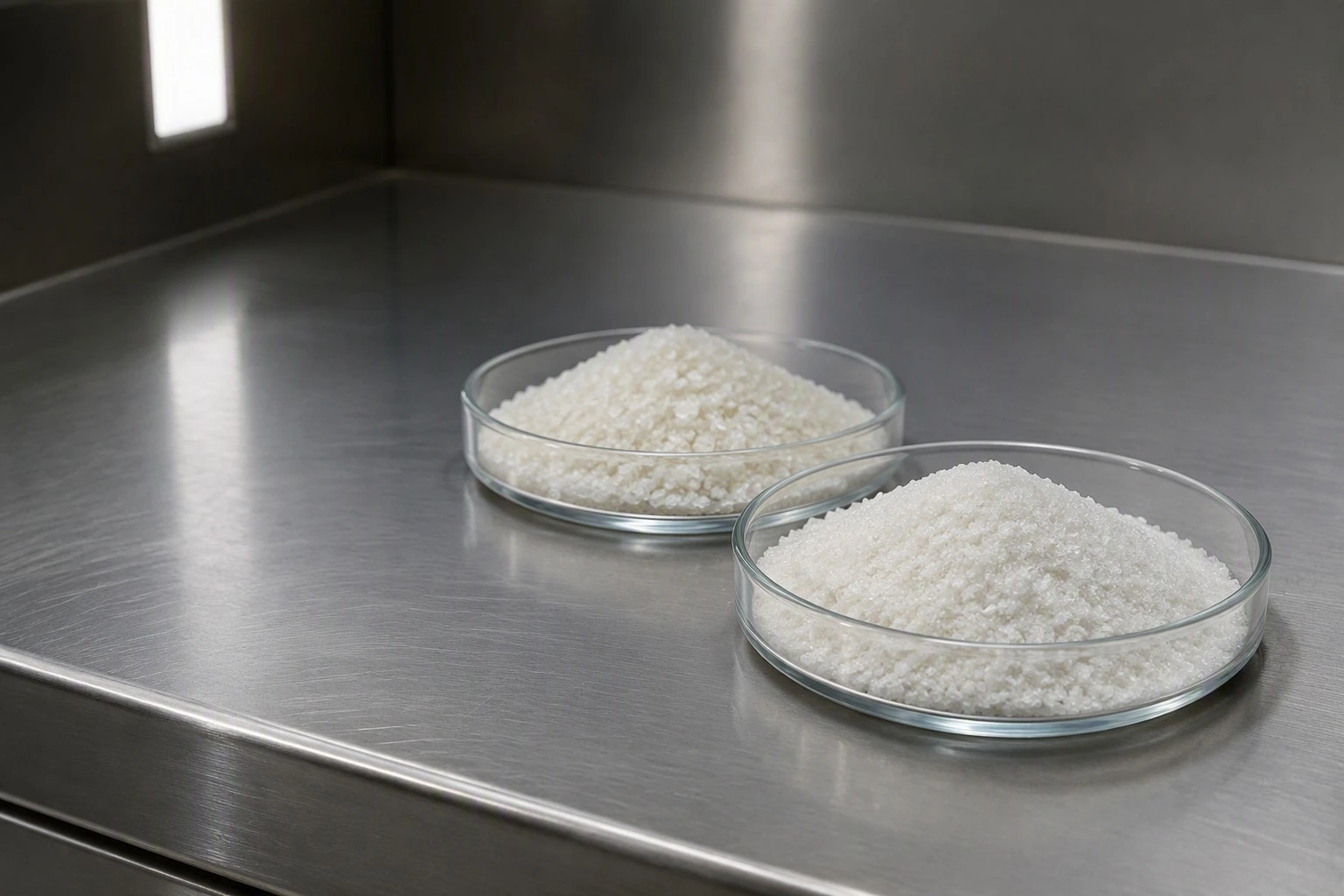
Stability is where most ingredient comparisons end up, and the variable most often missing from a quotation. Both NAD+ and NMN are hygroscopic and sensitive to moisture and heat during storage and processing. A grade that takes up water in a humid filling room will cake, lose flowability, and drift out of specification between the COA date and the declared end of shelf life - a failure that surfaces in the marketplace, not the warehouse.
This is why delivery format is a genuine selection variable, not a marketing story. Encapsulation in a phospholipid bilayer - the liposomal route - is designed to protect the active from moisture, oxygen and light during storage and to change how it disperses in the finished matrix. Buyers comparing liposomal NMN powder with liposomal NAD+ powder should compare three things: encapsulation efficiency as a stated, testable figure; particle size distribution; and stability data on the finished powder - not the molecule name printed on the drum.
When procurement teams ask us to work through liposomal NAD+ vs NMN, the deciding evidence is almost always documentation. Two suppliers quoting the same molecule at the same purity can deliver materially different products if one cannot produce encapsulation efficiency data, a particle size distribution, or real-time stability data. Practical steps: request samples at the exact grade you will run, hold them under your own storage conditions, and test dispersibility in your matrix before committing a commercial batch.
Specification Options for Bulk Buyers
There is no single "correct" specification for bulk NMN powder or NAD+. There is a standard set of parameters, however, that any competent supplier should be able to define and test. Use this list as the backbone of your RFQ:
- Identity and assay. Confirm the assay method - HPLC is the working standard for these nucleotides - and ask for a representative chromatogram, not just a percentage.
- Form and counter-ion. Free acid or sodium salt; it changes molecular weight, assay mathematics and label declaration.
- Moisture. Karl Fischer titration, with a limit your filling environment can actually hold.
- Heavy metals. ICP-MS, with limits set against your destination market (ICH Q3D and USP <232>/<233> are common reference frameworks).
- Microbiology. Total aerobic count plus yeast, mould and specified organisms, tested against the relevant pharmacopoeial chapters (for example USP <2021>/<2022> or EP 2.6.12/2.6.13).
- Residual solvents, where the route of manufacture uses them.
- Particle size and flowability, if you fill capsules, sachets or stick packs.
- Solubility and dispersibility in your specific matrix: powder blend, capsule, RTD.
- Packaging and shelf life, including the container closure and the storage conditions assumed.
The document pack to request before you place a purchase order:
- Specification sheet for the exact grade quoted
- Batch-specific Certificate of Analysis with the test methods stated
- Safety Data Sheet
- Stability data - accelerated, and ideally real-time
- Allergen, GMO and BSE/TSE statements
- Halal / Kosher certification, where your market requires it
- Country of origin and manufacturing site
- Confirmed MOQ, lead time and packaging configuration
Two practical rules. First, price per kilogram is only comparable once assay, form and packaging are identical - a cheaper quote at a lower assay is often the more expensive ingredient. Second, treat "≥98%" on a quotation as an invitation to verify rather than a specification; request the value on the batch COA and the method that produced it. In our own practice, purity, encapsulation and particle-size values are issued per batch with the COA, so a brand's QA team can audit what it received.
Regulatory & Labeling Reality by Market

Regulatory status, not price, is usually the first question a brand's compliance team raises - and it differs by market. The summary below reflects publicly available regulatory information as of September 2026. It is a sourcing orientation, not legal advice; confirm the current position with the relevant authority or a regulatory consultant before you ship or label.
- United States. In October 2022, the FDA took the position that NMN was excluded from the dietary supplement definition under the FD&C Act, citing its prior drug investigation. After industry petitions and litigation, that position was reversed in late September 2025, and the agency formally restored the ingredient's new dietary ingredient (NDI) status on 2 December 2025, with response letters published 9 December 2025. Check FDA's ingredient resources for the current record.
- European Union. NMN is treated as a novel food under Regulation (EU) 2015/2283, so it may not be placed on the EU market as a food supplement until it is authorised and listed. The EFSA Panel on Nutrition, Novel Foods and Food Allergens published a favourable scientific opinion in May 2026 on chemically synthesised β-NMN intended for use in food supplements as a source of niacin at up to 300 mg/day for adults, excluding pregnant and lactating women. An EFSA opinion is one step; authorisation is a separate procedure. Check the EU Novel Food catalogue before commercialising.
- Japan. NMN-containing products are marketed through the Foods with Functional Claims (FFC) route: the seller files a notification with the Consumer Affairs Agency and supports the claim with evidence. Public filing data show 13 NMN-containing FFC products registered between 2023 and 2025, with claims centred on walking ability, sleep quality and skin moisture in defined adult populations. FFC is notification-based, and responsibility for the claim rests with the filer - putting the evidence pack in your diligence scope, not only your marketing plan.
What this means for a sourcing decision: the finished-product claim you can make is downstream of the market you sell into. Ask your supplier for the documentation that supports your filing - composition, process, specifications and stability data - in a usable format.
FAQ
What is the difference between NAD+ and NMN as bulk ingredients?
NAD+ is the active coenzyme; NMN is a direct precursor that the body converts into it. As purchased raw materials, the practical difference is delivery: orally administered NAD+ is exposed to extracellular degradation before efficient absorption, so it is normally specified for specialized delivery systems, while NMN is the conventional choice for oral formats. Both require tight moisture control and batch-level analytical documentation.
NMN vs NMNH - which one should a formulator consider?
NMN has the broader supplier base, more comparable grade structure and more regulatory precedent, which makes it the lower-risk starting point. NMNH is newer to market with fewer commercial grades; it can be evaluated, but treat it as a qualification project requiring identity confirmation, assay method and stability data.
Is liposomal NAD+ better than NMN for a supplement brand?
They answer different questions. Liposomal delivery addresses stability and dispersion of the active in the finished matrix; the choice between molecules is driven by your target claim, format and market. The useful comparison is not the molecule name but the documentation: encapsulation efficiency, particle size distribution and stability data on the finished powder.
How should I specify NMN purity and what documents should I request?
Set your assay limit by HPLC, agree the form and counter-ion in writing, and specify moisture, heavy metals and microbiological limits against your destination market. Then request a specification sheet, a batch-specific COA with test methods stated, an SDS, stability data, and allergen, GMO and BSE/TSE statements. Confirm the value on the batch COA, not a headline purity figure.
What are the stability and storage requirements for bulk NMN?
NMN is hygroscopic and sensitive to moisture and heat. Store it cool, dry and protected from light in moisture-barrier packaging, keep the container closed between dispensing operations, and work from the shelf life and storage conditions on the COA. In humid filling environments, run an in-house moisture and flowability check before committing a batch.
Whichever side of the NAD+ vs NMN decision your formulation sits on, the documentation usually decides the outcome. If you would like to benchmark grades, explore our liposomal ingredient range before you brief your supplier.
Request Specifications & Samples
Tell us your target specification and application, and we will send the specification sheet, batch COA and a sample for your own bench trial.
Email: liu@wellgreenxa.com
Tel/WhatsApp: +86-19890982054
Or use the inquiry form below - we usually reply within 24 hours.
Sources
- U.S. Food and Drug Administration - Dietary supplement ingredient resources. https://www.fda.gov/food/dietary-supplements/information-select-dietary-supplement-ingredients-and-other-substances
- NutraIngredients - "FDA declares NMN lawful in dietary supplements" (30 September 2025). https://www.nutraingredients.com/Article/2025/09/30/fda-declares-nmn-lawful-in-dietary-supplements/
- EFSA Journal 2026;24(5):e10007 - Safety of beta-nicotinamide mononucleotide (β-NMN) under Regulation (EU) 2015/2283. https://doi.org/10.2903/j.efsa.2026.10007
- CIRS Group - Global Regulatory Progress of NMN in the US, Australia and the EU (2 December 2025 NDI restoration; 9 December 2025 response letters). https://www.cirs-group.com/en/food/global-regulatory-progress-of-nmn-in-the-united-states-australia-and-european-union
- CIRS Group - Overview of NMN Functional Food Labeling Filings in Japan. https://www.cirs-group.com/en/food/overview-of-nmn-functional-food-labeling-filings-in-japan
