



ACV Powder vs. Liquid Vinegar: B2B Sourcing & Supplier Guide
Selecting the optimal format for apple cider vinegar powder (ACV Powder) versus its liquid counterpart is a pivotal decision for B2B procurement managers and R&D formulators in 2026. While the traditional liquid fermented tonic remains popular in household kitchens, the industrial shift toward high-purity apple cider vinegar powder is driven by the need for molecular stability, standardized acidity, and logistical efficiency. For manufacturers of dietary supplements, functional foods, and premium pet nutrition, the move to a powdered format is not merely a convenience-it is a strategic upgrade that eliminates the volatility and corrosive nature of liquid acetic acid.
As global wellness brands compete for "Clean Label" dominance, the ability to source a standardized apple cider vinegar powder bulk supply with verified organic certifications (USDA/EU) has become a primary competitive advantage. This guide provides a technical framework for comparing these two formats and establishes a rigorous vetting process for identifying a top-tier apple cider vinegar powder supplier.
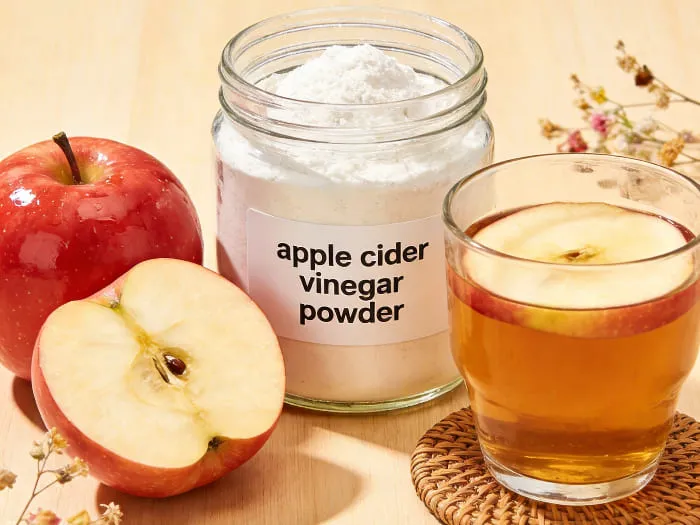
1. Technical Comparison: Why Powder Outperforms Liquid in B2B
From a manufacturing and supply chain perspective, liquid apple cider vinegar presents significant challenges. The transition to apple cider vinegar powder solves these issues through advanced encapsulation and standardization.
I. Chemical Stability and Preservative-Free Formulation
Liquid vinegar is an active fermentation product; it is chemically "restless" and can continue to react with other ingredients in a formulation, often leading to gas production or pH drift. Conversely, apple cider vinegar powder is inherently stable. Because the water activity ($a_w$) is significantly reduced during the spray-drying process, the powder does not require the added preservatives often found in commercial liquid vinegars to maintain shelf life.
II. Logistical Efficiency and Risk Mitigation
Liquid ACV is heavy, voluminous, and corrosive to many types of industrial storage and shipping containers.
- Zero Leakage: Powder eliminates the risk of "vinegar seepage" or container rupture, which can contaminate an entire ocean freight shipment.
- Cost Reduction: By removing the water weight, you are shipping a concentrated active ingredient. This reduces your carbon footprint and shipping costs by up to 70% per unit of acetic acid.
III. Precision Dosing and Consistency
A major pain point with liquid ACV is batch-to-batch acidity variance. Our apple cider vinegar powder is standardized to 5%, 8%, or 10% acetic acid. This allows formulators to hit exact potency targets for "Metabolic Support" or "Digestive Health" labels without the guesswork involved in liquid titration.
2. The Sourcing Decision Tree: Choosing the Right Specification
Not all apple cider vinegar powder is created equal. Your choice of specification should be dictated by your target market and manufacturing process.
Organic vs. Conventional
- Organic (USDA/EU): Essential for premium brands targeting the North American and European markets. Choosing the organic version ensures that the original apples were grown without synthetic pesticides and that the extraction process uses only approved organic carriers like organic maltodextrin or apple fiber.
- Conventional: A cost-effective solution for price-sensitive markets or industrial applications where organic certification is not the primary driver.
Granulometry (Mesh Size)
- 80 Mesh (Fine Powder): The industry standard for instantized beverages and capsules. It ensures rapid dissolution and a smooth mouthfeel in liquid-reconstituted products.
- 30-60 Mesh (Granular): Preferred for animal feed premixes, baked goods, or seasonings. The larger particle size provides better flowability in high-volume hopper systems and prevents clumping in dry-blend environments.
Acidic Potency (Acetic Acid Content)
- 5% - 8%: Ideal for "General Wellness" gummies and functional snacks where flavor balance is important.
- 10% High-Potency: Specifically engineered for dietary supplement capsules where space is limited and maximum biological activity per milligram is required.
3. Supplier Evaluation Checklist: Vetting for Global Compliance
When evaluating an apple cider vinegar powder supplier, the "lowest price" is often a red flag for poor bioactive retention or high heavy metal content. Use this technical checklist to vet your partners:
✅ Verification of "The Mother."
Does the supplier process the vinegar with the sediment (The Mother)? High-quality B2B grades must retain the proteins and enzymes that provide the holistic benefit of the vinegar. Request a polyphenol report (specifically Chlorogenic Acid) to verify the botanical integrity.
✅ Rigorous Lab Testing (Third-Party)
A reputable apple cider vinegar powder bulk supplier should provide more than just an internal COA. Look for third-party validation from accredited labs like SGS or Eurofins for:
- Acetic Acid Assay: Verified via HPLC or Titration.
- Heavy Metals: Lead, Arsenic, and Cadmium (must be well below USP/EP limits).
- Microbial Purity: Total Plate Count, Yeast/Mold, and absence of E. coli/Salmonella.
✅ Supply Chain Stability and Capacity
For B2B brands, supply chain continuity is non-negotiable.
- Batch Consistency: Ask for COAs from three different batches over the last 12 months to verify the variance in acetic acid and moisture content.
- Inventory Readiness: Does the supplier maintain safety stock for high-volume orders?
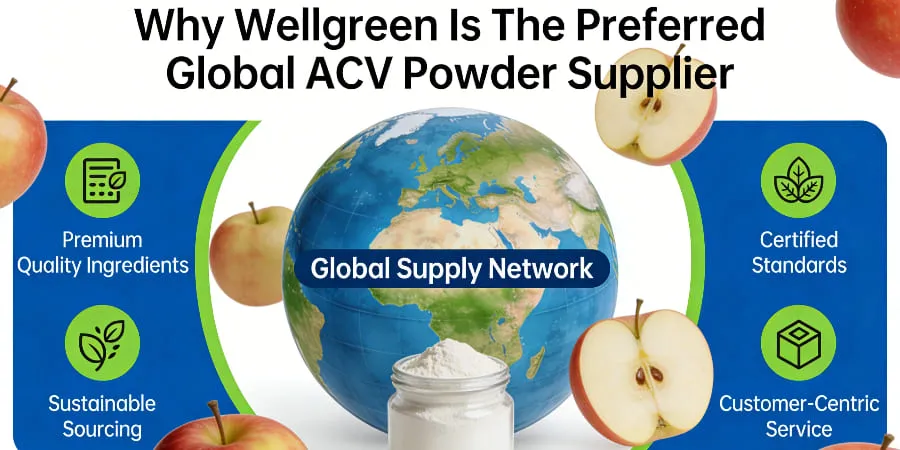
4. Why Wellgreen is the Preferred Global ACV Powder Supplier
As a vertically integrated manufacturer, Wellgreen has optimized the apple cider vinegar powder production loop to meet the exacting standards of the global pharmaceutical and nutraceutical industries.
- Standardized & Custom Specifications: We offer fixed 5%, 8%, and 10% acetic acid grades, with the ability to customize carrier types (Organic Maltodextrin, Tapioca, or Apple Fiber) to fit your Clean Label strategy.
- Full Traceability: From the selection of premium apples to the final spray-drying stage, every batch is traceable. Our facility holds USDA Organic, ISO 9001, Halal, and Kosher certifications.
- Advanced Bioactive Retention: We utilize low-temperature spray drying to protect the volatile acetic acid and the heat-sensitive enzymes of "The Mother," ensuring your powder is functionally equivalent to the original liquid.
- Flexible Logistics: Whether you require 1kg samples for R&D or 25kg drums for full-scale production, our global logistics team ensures duty-compliant delivery to your facility.
Conclusion: Making the Strategic Sourcing Choice
The transition to apple cider vinegar powder represents a maturation of your product line-moving from unstandardized liquid commodities to precise, high-performance active ingredients. By choosing a supplier that prioritizes standardized acetic acid, organic compliance, and rigorous technical documentation, you ensure that your brand delivers on its metabolic and digestive promises every time.
At Wellgreen, we don't just provide a bulk ingredient; we provide the scientific infrastructure and regulatory peace of mind required for global market leadership.
Secure Your 2026 Supply Chain Today
Are you currently evaluating your sourcing strategy or looking to transition from liquid to a more stable apple cider vinegar powder? Our technical team is ready to provide you with a "Supplier Validation Dossier," including COAs, stability data, and custom samples for your R&D trials.
Contact our export sales department today to request a volume-based quote or a technical consultation. Let's collaborate to turn the precision of botanical science into your brand's next market success.
[Request a Quote & Samples] | [Consult with our Technical Sales Team]
