


Amongst the various harmful factors in crop growth, weeds are particularly damaging and cause more crop yield losses than the combined losses caused by plant diseases and pests worldwide. If weeds are not controlled, approximately 33%-53% of the crop will be destroyed. Traditionally, chemical herbicides have been used to remove weeds in the large-scale cultivation of Chinese herbs. However, while chemical herbicides affect the growth and development of weeds, they also have more or less adverse effects on the Chinese herbs themselves, which will eventually affect the yield, quality and clinical efficacy of the Chinese herbs. In addition, the long-term use of large quantities of herbicides can cause weeds to develop resistance, making later weed control more difficult. Chemosensitisation refers to the beneficial and harmful effects of secondary metabolites of plants, bacteria, fungi and algae on the growth and development of agricultural and natural ecosystem organisms, which are called chemosensitised substances. The use of chemosensitive substances as plant-derived herbicides is becoming a hot topic of research, as they have no residual or toxic effects.
Mugwort is the dried leaf of Artemisia argyi Levl. et Vant. of the Asteraceae family, which has the effect of warming the menstrual flow and stopping bleeding, dispersing cold and relieving pain; it is used externally to dispel dampness and relieve itching. As early as the ancient Chinese poetic scriptures, it was recorded that moxa leaves were used to induce fire, and the first medical book in China, the Yellow Emperor's Classic of Internal Medicine, recorded the use of moxa leaves for moxibustion therapy. Modern pharmacology has shown that mugwort leaves have various pharmacological effects such as antibacterial, antiviral, haemostatic, antitumour, hepatoprotective and choleretic, antioxidant, cough suppressant, analgesic and anti-inflammatory, hypoglycaemic and immunomodulatory, with phenolic acids, flavonoids and sesquiterpenes being its main pharmacological components. However, the team observed in the field that mugwort has strong competition for ecological niches and is a dominant community with few surrounding weeds and low biodiversity, suggesting that mugwort may have a more intensified sensory biological and ecological effect. Meanwhile, in a previous experiment on ecological planting of Chinese herbs, mugwort powder was designed to be used as fertiliser for chrysanthemum, echinacea and atractylodes, and it was found by chance that the medium and high mugwort powder treatments had a significant inhibition effect on weed species, number and biomass in the fields of chrysanthemum, echinacea and atractylodes compared to the blank control. The results suggest that mugwort leaves may have significant herbicidal effects and potential to be developed as a plant-derived herbicide, so its herbicidal effects were systematically evaluated and the material basis and mechanism of action were investigated.
For the first time, the team found that aqueous extracts of mugwort leaves had strong inhibitory activity against the monocotyledonous weeds Setaria viridis and Echinochloa crusgalli, and the dicotyledonous weeds Portulaca oleracea and Amaranthus retroflexus. Using the herbicidal activity as a guide and combined with LC-MS to carry out targeted separation, the phenolic acid compound isochlorogenic acid A was found to be the main chemosensitively active substance in mugwort and was detected in the growing soil of mugwort, indicating that mugwort can inhibit weed growth through the release of isochlorogenic acid A into the environment. At the same time, the broad spectrum of weed inhibiting activity of isochlorogenic A was confirmed by the inhibition of weed growth in six different families, indicating that isochlorogenic A can be used as a green herbicide and may also provide food for thought and inspiration for new herbicides as a pioneer compound.
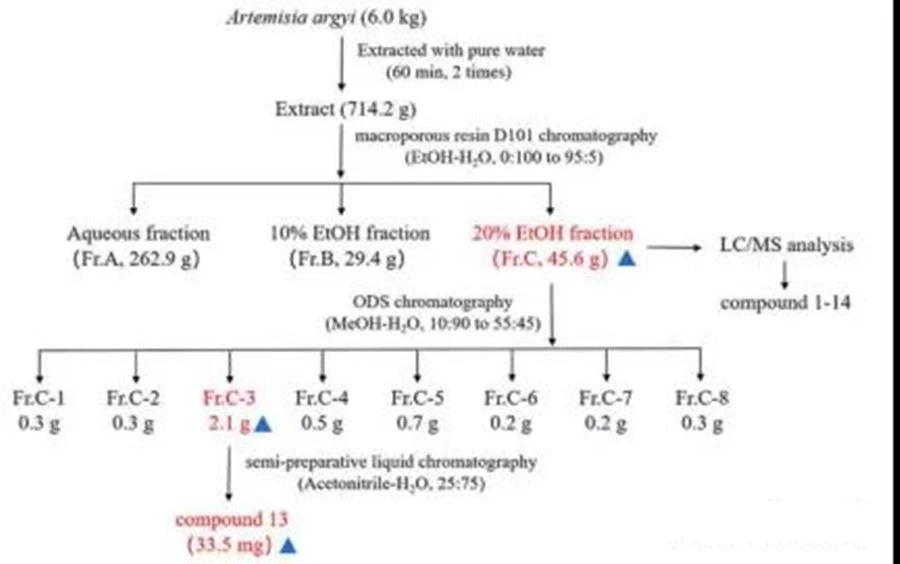
Fig. 1 Activity-guided isolation of chemosensitive active substances from aqueous extracts of mugwort leaves
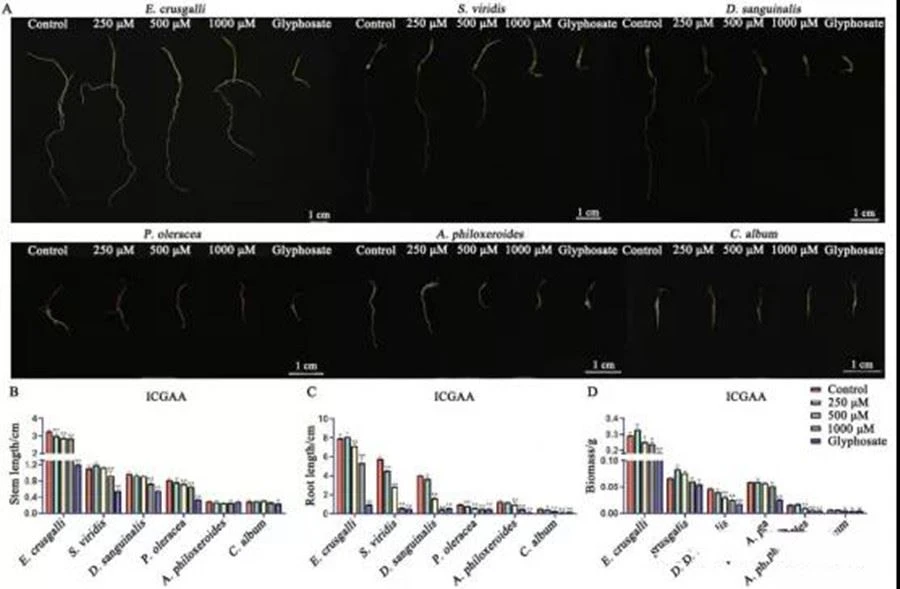
Figure 2 Evaluation of the broad-spectrum herbicidal activity of isochlorogenic acid A
Physiological analysis showed that isochlorogenic acid A treatment caused weed leaves to crumple, yellow and die. Light microscopy and transmission electron microscopy revealed that isochlorogenic acid A caused leaf epidermal cell shrinkage, enlarged leaf vein vascular sheath cells and decreased internal chlorophyll; cell membrane dissolved and detached from the cell wall and organelles disintegrated.
The research team used RNA-seq to elucidate the changes in transcript levels of weeds after isochlorogenic acid A treatment. 716 genes were differentially expressed, of which 439 were up-regulated and 277 down-regulated. "KEGG enrichment analysis revealed that inhibition of the "diterpenoid biosynthesis" pathway is an important mechanism of action for the herbicidal activity of isochlorogenic acid A, mainly inhibiting weed gibberellins and phytoplankton. This was verified by RT-qPCR and gibberellin content measurements.
