



Introduction: From Ayurveda to Modern Hair Care
The shift toward natural shampoo ingredients has redefined the hair care industry in recent years. As consumers grow wary of synthetic surfactants like SLS (Sodium Lauryl Sulfate) and SLES, herbal alternatives are gaining traction - especially those with cleansing properties derived from Ayurvedic botanicals such as Soapnut (Reetha, Sapindus mukorossi) and Shikakai (Acacia concinna).
These two natural surfactants have been used for centuries in India for gentle yet effective hair cleansing. Traditional Ayurvedic texts describe their ability to remove impurities, promote scalp health, and enhance hair texture without stripping natural oils. Today, both Soapnut Extract and Shikakai Extract are being revisited by modern formulators as saponin-based cleansers suitable for sulfate-free, plant-powered shampoos and eco-friendly hair care formulations.
But how do they actually compare in performance, chemical composition, and formulation potential? This article takes a deep, evidence-based look at Soapnut Extract vs Shikakai, evaluating their cleansing mechanisms, functionality, and roles in sustainable beauty innovations.
Ingredient Overview: Botanical Origins and Active Components
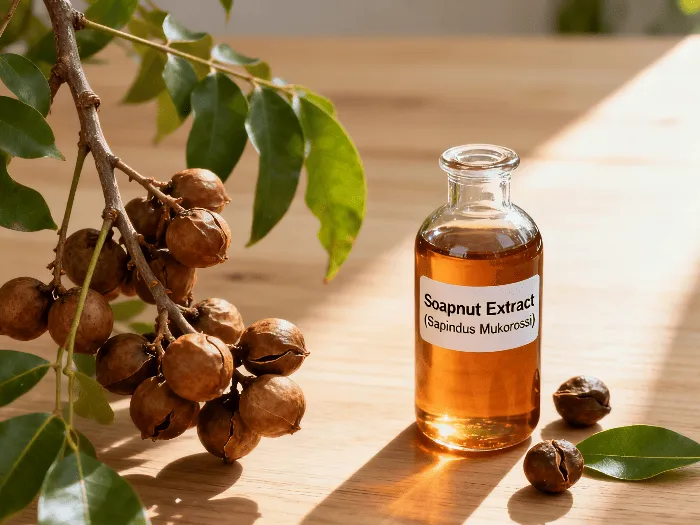
Soapnut Extract (Sapindus mukorossi)
Soapnut, often referred to as soapberry, is the dried fruit of a tree native to northern India and the Himalayan foothills. The pericarp (fruit shell) is rich in triterpenoid saponins, compounds responsible for its natural foaming and cleansing activity. According to a study published in Industrial Crops and Products (2019), soapnut pericarp contains up to 15–20% saponins, primarily hederagenin glycosides, which exhibit both surfactant and antimicrobial properties.
Beyond its cleansing potential, Soapnut Extract also provides antioxidant, anti-inflammatory, and mild antibacterial benefits - properties that help protect scalp microbiota and maintain balance in sensitive formulations. The extract is typically prepared via aqueous or hydroalcoholic extraction, yielding a natural surfactant concentrate ideal for mild cleansing systems.
Shikakai Extract (Acacia concinna)
Shikakai, another ancient Ayurvedic hair cleanser, is derived from the pods of Acacia concinna, a climbing shrub native to Central and South India. It also contains saponins but in slightly lower concentrations (reported between 6–12% in Journal of Ethnopharmacology, 2017). Besides saponins, Shikakai is rich in flavonoids, alkaloids, and organic acids (citric, oxalic, tartaric), which contribute to its natural conditioning and pH-balancing properties.
Traditionally, powdered Shikakai is used as a paste to cleanse hair while maintaining its softness and shine. Modern Shikakai Extracts preserve these bioactive properties in liquid or powder form, suitable for cosmetic formulations.
Functional Comparison: Cleansing, Foam, and Mildness
Cleansing Power and Foam Profile
Both Soapnut and Shikakai derive their surfactant activity from saponins, which lower surface tension and emulsify oils. However, Soapnut generally shows stronger detergency and higher foaming capacity, as confirmed by comparative tests in Cosmetic Science Journal (2020). This makes Soapnut Extract ideal for formulations where visible foam and deeper cleansing are desired - such as oily scalp shampoos or clarifying cleansers.
Shikakai, on the other hand, provides gentler cleansing with lower foam but superior conditioning effects. Its saponins have milder action, reducing potential irritation and preserving the scalp's lipid layer - making it more suitable for dry or sensitive scalps.
pH and Scalp Compatibility
Shikakai naturally exhibits a slightly acidic pH (around 4.5–5.5), aligning closely with the scalp's physiological range. This helps smooth the cuticle layer, reduce frizz, and enhance shine. Soapnut Extract, while effective, may have a slightly higher natural pH (around 6–7), which can be adjusted during formulation for optimal scalp compatibility.
Conditioning and Repair Effects
Due to its flavonoid and organic acid content, Shikakai provides mild astringent and detangling benefits, often reducing the need for added conditioners. Soapnut's key advantage lies in its deep cleansing and antimicrobial action, making it suitable for dandruff-control or scalp detox products.
| Property | Soapnut Extract | Shikakai Extract |
|---|---|---|
| Main Active | Triterpenoid saponins (hederagenin type) | Saponins + flavonoids + organic acids |
| Cleansing Strength | Strong | Mild |
| Foam Production | High | Low to medium |
| pH (Natural) | 6.0–7.0 | 4.5–5.5 |
| Conditioning Effect | Moderate | High |
| Ideal Use | Oily scalp, clarifying shampoo | Dry hair, daily mild cleanser |
Application in Modern Hair Formulations
Sulfate-Free and Botanical Cleansing Systems
The global sulfate-free shampoo market is growing at a CAGR of over 8% (2024–2030), according to Grand View Research. Both Soapnut and Shikakai Extracts are key botanical alternatives used in plant-based surfactant systems, often combined with mild amphoteric or nonionic surfactants (e.g., coco-glucoside, lauryl glucoside) to enhance foaming and texture.
Formulators use Soapnut Extract as a primary cleansing agent, while Shikakai Extract acts as a natural co-surfactant and conditioning enhancer, offering a balanced cleansing experience.
Synergistic Blends
Both ingredients pair well with other botanicals such as:
- Aloe vera for scalp hydration
- Green tea extract for antioxidant protection
- Ginger extract for stimulating hair follicles
- Licorice or amla extract for scalp soothing
Such combinations enable brands to build customized herbal hair cleansers that meet diverse consumer needs - from volumizing shampoos to anti-dandruff and scalp-balancing treatments.
Form Types
- Liquid shampoo - Soapnut as main surfactant, Shikakai as co-active
- Powder or bar shampoo - For waterless, zero-waste products
- Hair rinse or tonic - Low-foam natural cleansing for minimalists
Market Demand & Positioning
Global Natural Hair Care Momentum
The global herbal hair care market is projected to reach USD 15.5 billion by 2030 (Allied Market Research, 2023), driven by consumer demand for cleaner formulations and transparency in ingredient sourcing. "Soapnut Extract" and "Shikakai Extract" have become recognized keywords among eco-conscious and Ayurvedic-inspired brands catering to both Asia-Pacific and Western consumers.
Regional Insights
- Asia: Traditional familiarity drives usage in India, China, and Southeast Asia.
- Europe & North America: Increasing preference for sulfate-free and vegan shampoos with verifiable plant origins.
- Oceania & Nordic markets: Interest in solid shampoo bars featuring biodegradable surfactants from soapberry or acacia sources.
Positioning in OEM and Private Label Formulations
For contract manufacturers and OEM suppliers, the differentiation between Soapnut and Shikakai helps target distinct product concepts:
- Soapnut Extract: Marketed for "deep cleansing" or "scalp detox" lines
- Shikakai Extract: Marketed for "gentle, daily, nourishing" hair care lines
Both extracts align perfectly with sustainable beauty narratives, offering a renewable, biodegradable, and ethically sourced alternative to synthetic detergents.
Sustainability Perspective
From an environmental standpoint, both Soapnut and Shikakai offer low ecological impact and high biodegradability. Soapnut trees (Sapindus mukorossi) are perennial and drought-resistant, producing fruit annually without requiring intensive agricultural input. Similarly, Acacia concinna is a nitrogen-fixing plant, enhancing soil fertility and preventing erosion.
Sustainable sourcing practices - such as wild harvesting under regulated collection zones and fair-trade certification - further enhance their appeal in clean beauty supply chains. As part of the broader "green surfactant" movement, saponin-based cleansers help reduce dependency on petrochemical-derived ingredients while maintaining product performance.

Conclusion & Call to Action
When it comes to choosing between Soapnut Extract vs Shikakai Extract, the best option depends on formulation goals and target users:
- Choose Soapnut Extract for stronger cleansing, higher foam, and scalp purification benefits.
- Choose Shikakai Extract for gentler cleansing, improved hair softness, and natural pH balance.
- Combine both for a balanced botanical surfactant system that delivers natural foaming with scalp-friendly mildness.
As the clean beauty and sustainable formulation trends continue to accelerate, these Ayurvedic ingredients represent not just a cultural revival but also a scientific opportunity - to create products that are effective, eco-conscious, and consumer-trusted.
Wellgreen offers premium-quality Soapnut Extract, Shikakai Extract, and other botanical surfactants, including Reetha, Aritha, and fruit-derived saponins.
We provide customized formulations, standardized saponin content, and OEM development support for global personal care and beauty brands committed to natural innovation.
👉 Explore our range of natural surfactant extracts and discover how Wellgreen can support your clean formulation goals.
