



Purslane extract powder is increasingly recognized as a high-quality, clean-label botanical ingredient - but how exactly does it go from humble herb to reliable, standardized powder? In this article, we walk you through the entire manufacturing process for purslane extract powder, from raw material sourcing to extraction, concentration, drying, and quality control. This transparent "behind-the-scenes" look underscores our technical competence and helps you - as a B2B ingredient buyer - evaluate suppliers with confidence.
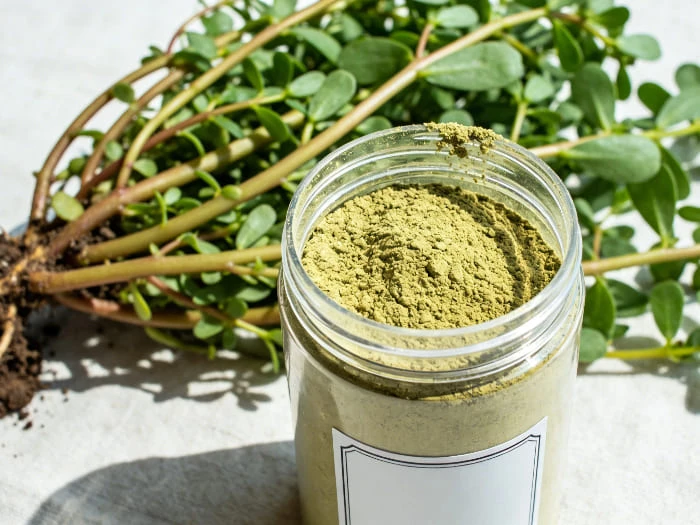
What is Purslane and Why Extraction Matters
Purslane (Latin name Portulaca oleracea) is a widespread herbaceous plant valued in traditional medicine and food uses worldwide. As a raw botanical, purslane contains a rich mix of nutrients and phytochemicals: flavonoids, polysaccharides, omega-3 fatty acids (notably α-linolenic acid), vitamins, minerals, and other bioactive substances.
However, using raw purslane directly in industrial formulations - whether for dietary supplements, functional foods, or nutraceuticals - presents significant challenges:
- High moisture content leads to instability and rapid spoilage.
- Batch-to-batch variation in active compound levels.
- Bulkiness makes transportation and storage costly.
- Difficulty ensuring microbial safety, purity, and consistent potency.
These issues make extraction - and subsequent processing into a powder - a necessary step for any supplier aiming for commercial-grade, standardized botanical ingredients that meet modern regulatory, safety, and quality standards.
Step 1: Raw Material Sourcing & Quality of Botanicals
The journey begins with careful sourcing of the botanical raw material. Essential factors include:
- Botanical identification and harvest conditions: Ensuring correct species (Portulaca oleracea), checking for absence of contaminants (weed, pesticides, heavy metals), and harvesting at optimal growth stage to maximize phytochemical content.
- Post-harvest handling and drying of raw herb: Immediately after harvest, the fresh purslane must be dried under controlled conditions (e.g., low-temperature shade drying, or hot-air drying with temperature and humidity control) to reduce moisture content, inhibit microbial growth, and preserve active compounds.
- Batch traceability: Each batch of raw herb should be traceable to its origin - harvest date, field or farm, growing conditions - to ensure consistency and reproducibility.
By carefully controlling these upstream variables, a supplier lays the foundation for consistent extract quality.
Step 2: Extraction - Isolating the Active Components
After sourcing and pre-processing (drying, cleaning, milling), the dried purslane material undergoes extraction to concentrate its bioactive constituents. The extraction process typically involves the following key aspects:
- Solvent selection: For botanical extracts such as purslane, suppliers commonly use water or aqueous-ethanol (or hydro-ethanolic) solvents. Water or mild ethanol ensures the extraction of flavonoids, polysaccharides, and other water- or ethanol-soluble constituents without harsh chemicals. This approach aligns with clean-label and food-grade requirements.
- Controlled temperature and time: Extraction parameters (temperature, duration, solid-to-liquid ratio) are carefully controlled to maximize yield while minimizing degradation of sensitive compounds (e.g., flavonoids, phenolics, omega-3). Overheating or overly long extraction can degrade active constituents.
- Filtration and separation: After extraction, the mixture is filtered or centrifuged to remove insoluble plant fibers, chlorophyll residues, and particulate matter, yielding a clear extract liquid rich in desired phytochemicals.
- Concentration: The filtered extract is then concentrated (e.g., via vacuum evaporation) to reduce volume and increase the concentration of active compounds, preparing the material for drying.
At the end of the extraction stage, the result is a concentrated liquid extract, standardized in terms of solvent-to-dry-herb ratio, extract-to-solvent ratio, and (ideally) preliminary active-compound assay.
Step 3: Drying and Powder Formation - From Liquid Extract to Stable Powder
To create a shelf-stable, transportable, easy-to-formulate ingredient, the concentrated extract is converted into a powder through drying. The most common technique is spray-drying, though freeze-drying may be used in higher-end or sensitive applications. Key considerations in this stage:
| Process | Purpose / Advantage |
|---|---|
| Spray-drying | Rapid drying of extract droplets → produces fine, free-flowing powder; cost-effective and scalable. Ideal for large-volume B2B supply. |
| Freeze-drying (lyophilization) | Gentle drying under low temperature → better retention of heat-sensitive compounds (flavonoids, omega-3) and minimal oxidation. Suitable when maximal bioactivity preservation is required. |
| Low residual moisture target | Ensures long shelf-life, inhibits microbial growth, and stabilizes active constituents. Moisture contents ≤ 5–7 % are typical for stable powders. |
| Inert-atmosphere or nitrogen blanketing (optional) | Minimizes oxidation during drying and packaging - especially important for compounds such as omega-3 fatty acids. |
| Standardized batch production | Every batch corresponds to a known input-to-output ratio, facilitating consistent potency and labeling compliance. |
After drying, the extract powder may be milled and sieved to the desired mesh size, ensuring uniformity and suitability for blending, encapsulation, or compounding into finished products.
Step 4: Standardization & Quality Control
A professional-grade purslane extract powder - suitable for B2B supply - must come with robust quality control procedures. These typically include:
- Assay of active compounds: Quantitative analysis (e.g., HPLC, UPLC, spectrophotometry) of key phytochemicals: total flavonoids, total phenolics, polysaccharide content, possibly fatty acid profile (for omega-3).
- Purity and safety tests: Heavy metals (lead, arsenic, cadmium, mercury), pesticide residues, microbial load (total plate count, yeast/mold, pathogens), aflatoxins (if relevant), moisture content, ash - ensuring compliance with food/supplement safety standards.
- Stability testing: Periodic checks to ensure that active compounds remain within specification over storage time under standard conditions.
- Batch-to-batch traceability and documentation: Every production lot should have a Certificate of Analysis (CoA), production date, batch number, raw-material source, and processing history.
These QC measures provide transparency and traceability - essential for regulatory compliance, clean-label certification, and supply-chain reliability.
Why This Matters for B2B Buyers - Benefits of Professionally Produced Purslane Extract Powder
By following the production steps above, a supplier can deliver a botanical ingredient that offers:
- Consistency in potency and quality - ideal for large-scale formulation with predictable outcomes.
- Clean-label compliance - water or aqueous-ethanol extraction, avoidance of harsh solvents, minimal residuals - aligns with consumer demand for natural, minimally processed ingredients.
- Ease of formulation - free-flowing powders are easier to handle, dose, blend, and incorporate into capsules, tablets, food products, or blends.
- Long shelf life and stability - low moisture, proper packaging, oxidation control ensure product remains stable over time and during transit.
- Regulatory and safety compliance - quality control and documentation reduce risks of contamination, variability, and compliance issues.
For B2B buyers - whether in dietary supplements, functional foods, nutraceuticals, or natural-ingredient formulations - these advantages translate into reduced risk, easier regulatory readiness, and greater confidence in supply continuity.

What to Ask Your Supplier: Evaluating Purslane Extract Powder Producers
When sourcing purslane extract powder, here are key questions and checkpoints to evaluate suppliers:
- What is your raw material sourcing policy? - Do they control species identification, harvest date, farm location, pesticide use, etc.?
- Which extraction solvent and process do you use? - Water or aqueous-ethanol? Extraction parameters? Solvent removal assurances?
- Can you provide a Certificate of Analysis (CoA) for each batch? - Including assay data for flavonoids, polysaccharides, moisture, heavy metals, microbial counts, and residual solvents (if any).
- What drying method and storage conditions are used? - Spray-drying vs freeze-drying; moisture control; packaging environment (e.g., inert gas).
- Do you perform stability testing? - Demonstrating active-compound retention over shelf life.
- What is the batch traceability and documentation? - Raw-material origin, batch number, production date - important for quality audits and regulatory compliance.
- Can you supply technical support for formulation? - E.g., recommended usage levels, solubility data, suggested applications (capsule, beverage, powder blend).
A supplier who answers these thoroughly shows professionalism, transparency, and reliability - key to long-term B2B partnerships.
Conclusion & Call to Action
Understanding how purslane extract powder is made - from plant sourcing, extraction, and drying, to standardization and quality control - is vital for any buyer evaluating botanical ingredients for real-world formulation and production.
A professionally manufactured purslane extract powder offers a clean-label, standardized, and versatile ingredient - suitable for supplements, functional foods, beverages, and more - with predictable quality, safety, and regulatory compliance.
If you are sourcing botanical extracts and want to evaluate a reliable purslane extract powder supplier with full transparency - including CoA, traceability, extraction details, and technical support - we welcome you to contact us. Request a sample batch, get the full technical datasheet, and discuss how purslane extract powder can integrate into your formulation pipeline. We are committed to supporting your product development with quality, consistency, and trust.
