



Liposome Omega-3 Powder is increasingly attracting attention from nutraceutical brands, functional food developers, and pet nutrition companies seeking more stable and versatile alternatives to conventional fish oil ingredients. By encapsulating omega-3 fatty acids within phospholipid-based liposomes, this technology can help improve oxidative stability, dispersibility in aqueous systems, and formulation flexibility.
However, when companies move from early product concept to real commercialization, practical questions often arise. Procurement managers want to understand how the ingredient behaves during manufacturing, R&D teams need to verify formulation compatibility, and brand owners must ensure logistics stability across global supply chains.
This article addresses the most common technical and commercial questions surrounding liposomal omega-3 powder, while also exploring emerging market trends that are shaping the future of omega-3 delivery technologies.
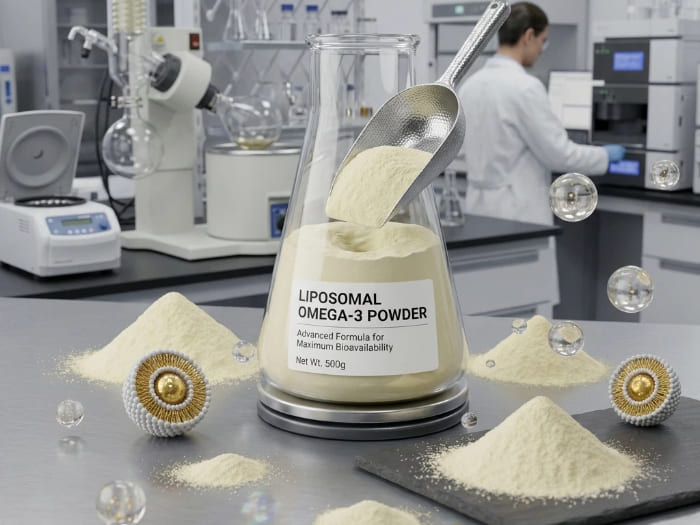
Bridging the Gap Between Laboratory Innovation and Commercial Products
Liposomal delivery systems have been studied for decades in pharmaceutical and nutrition science because phospholipid vesicles can protect sensitive molecules and support improved absorption pathways. When applied to omega-3 fatty acids-nutrients known for their sensitivity to oxidation-liposomal encapsulation can provide meaningful formulation advantages.
Yet transitioning this technology from the laboratory to real market applications requires addressing practical considerations, including manufacturing compatibility, product stability, and international logistics.
Below are several frequently asked questions that procurement and product development teams typically evaluate when considering liposome omega-3 ingredients.
Frequently Asked Questions About Liposome Omega-3 Powder
Q1: Does dry blending require specialized manufacturing equipment?
One of the most practical advantages of liposome omega-3 powder is that it can be designed as a free-flowing powder suitable for standard blending processes.
In most cases, manufacturers can incorporate the ingredient directly into existing dry-mix production systems such as:
- Powder blending lines
- Nutritional premix manufacturing
- Tablet compression formulations
- Functional beverage powder production
Because the ingredient is supplied in a stable powdered form, it typically does not require specialized emulsification equipment during dry processing. This simplifies integration into existing manufacturing workflows and reduces development barriers for new product launches.
For companies scaling from R&D to commercial production, this compatibility can significantly accelerate formulation timelines.
Q2: Can liposome omega-3 be used in clear beverages?
Transparent beverage systems remain one of the most technically demanding formulation environments for lipid-based nutrients.
Like most lipid delivery systems, liposomal omega-3 forms a stable micro-emulsion when dispersed in water, rather than a completely transparent solution. As a result, it is generally more suitable for:
- Functional nutrition drinks
- Protein beverages
- Meal replacement shakes
- Nutritional beverage powders
These applications naturally accommodate slightly opaque or milky textures, allowing formulators to incorporate omega-3 while maintaining a visually acceptable product.
For beverages that require perfect clarity-such as flavored waters-alternative delivery technologies may be more appropriate. However, for the majority of functional beverage products, liposomal omega-3 provides an effective balance between stability, dispersibility, and sensory performance.
Q3: How is oxidative stability maintained during long-distance shipping?
Omega-3 fatty acids are extremely sensitive to oxygen exposure and temperature fluctuations, which is why logistics and packaging protocols are critical when transporting these ingredients internationally.
High-quality suppliers typically implement several protective measures to maintain low peroxide values during shipping:
Nitrogen-Flushed Packaging
Containers are sealed in nitrogen-filled environments, reducing oxygen levels that can trigger lipid oxidation.
Oxygen-Barrier Packaging Materials
Multi-layer packaging films help prevent oxygen permeation during storage and transportation.
Optional Temperature-Controlled Shipping
For particularly sensitive logistics routes or warm climates, temperature-controlled containers can further reduce oxidative risk.
Shipment Monitoring Systems
Some suppliers include temperature and humidity data loggers inside shipments. These monitoring tools provide traceable records verifying that environmental conditions remained within safe ranges during transit.
When properly managed, these precautions help maintain low peroxide values and ensure that the ingredient arrives at the customer's facility with preserved quality.
Q4: What are the typical minimum order quantities (MOQ)?
Minimum order quantities often vary depending on the stage of product development.
For companies conducting early formulation trials or pilot production, flexible suppliers may support smaller evaluation quantities to facilitate research and prototype development. This allows product teams to verify stability, sensory properties, and processing compatibility before committing to large production volumes.
Once formulations move toward commercialization, larger order sizes can support more efficient manufacturing and supply planning.
In general, experienced ingredient partners offer scalable supply options, allowing customers to transition smoothly from laboratory-scale trials to full market launch.
Additional Considerations for Commercial Success
Beyond these frequently asked questions, successful liposomal omega-3 applications often depend on collaboration between ingredient suppliers and product developers.
Technical teams may provide support in areas such as:
- Stability optimization within complex formulations
- Compatibility with other active ingredients
- Shelf-life testing and packaging recommendations
- Regulatory documentation for different markets
These collaborative services can significantly reduce development risks for new product launches.
The Growing Market Opportunity for Liposomal Omega-3
While solving technical questions is important, it is equally valuable to understand the broader market forces driving demand for advanced omega-3 delivery systems.
Several long-term health and nutrition trends are shaping the future of liposomal omega-3 ingredients.
Precision Nutrition and Personalized Health
The global nutrition industry is increasingly shifting toward precision nutrition, where consumers seek targeted health solutions tailored to their specific physiological needs.
Omega-3 fatty acids are widely studied for their roles in:
- Cardiovascular health
- Cognitive function
- inflammatory balance
- early developmental nutrition
As consumers become more informed about nutrient bioavailability, delivery technologies such as liposomes are gaining attention for their potential to improve nutrient utilization.
Early-Life Nutrition and Maternal Health
Demand for high-quality DHA sources continues to grow in infant and maternal nutrition products, where safety, stability, and sensory neutrality are essential.
Liposomal encapsulation may help address some formulation challenges in these sensitive product categories by improving oxidative stability and reducing unwanted odors.
Sustainable and Responsible Nutrition
The nutrition industry is also experiencing increased pressure to adopt sustainable sourcing practices.
Omega-3 innovation is expanding beyond traditional fish oil sources toward algae-based ingredients and advanced delivery technologies that improve ingredient efficiency. Liposomal systems can potentially support this transition by maximizing the usability of existing omega-3 resources.

Functional Foods and Convenient Nutrition Formats
Modern consumers increasingly prefer convenient nutrition formats, including drink powders, nutrition bars, and ready-to-mix supplements.
Traditional omega-3 oils are difficult to integrate into these products, but liposome omega-3 powder offers significantly greater flexibility for product developers.
As functional foods continue to expand globally, demand for versatile omega-3 formats is expected to grow.
The Strategic Importance of Choosing the Right Innovation Partner
As liposomal omega-3 technology continues to evolve, the role of the ingredient supplier extends beyond raw material production.
Forward-thinking suppliers invest in:
- Advanced encapsulation technologies
- Stability research and formulation expertise
- cross-disciplinary R&D collaboration
- long-term innovation pipelines
For nutraceutical brands and food manufacturers, partnering with suppliers that possess strong scientific capabilities and global supply infrastructure can provide a significant competitive advantage.
Rather than simply purchasing ingredients, companies gain access to technical knowledge that supports continuous product innovation.
Conclusion: Unlocking the Future of Omega-3 Formulation
Liposome Omega-3 Powder represents an important advancement in omega-3 ingredient technology. By combining phospholipid encapsulation with a versatile powder format, it offers practical advantages in stability, dispersibility, and product development flexibility.
While successful commercialization requires careful consideration of manufacturing compatibility, logistics management, and formulation design, the growing demand for high-performance nutritional ingredients continues to drive innovation in this field.
From precision nutrition and early-life health to functional foods and advanced dietary supplements, liposomal omega-3 technology is well-positioned to support the next generation of nutrition products.
Explore Liposome Omega-3 Solutions for Your Next Product
If your company is developing functional foods, dietary supplements, or advanced nutrition products, liposome omega-3 powder may offer a flexible and scientifically grounded ingredient option.
Our technical team can support your project with:
- Detailed product specifications and documentation
- Stability and formulation guidance
- sample evaluation for R&D development
- OEM/ODM collaboration opportunities
Contact us today to request technical information or product samples, and discover how liposomal omega-3 ingredients can help bring your next innovation from concept to market.
